Loading
zhengye liao
Product designer · Milan

Zhengye Liao

My work focuses on the balance between art and function, from everyday objects to products for special uses.
I am based in Milan and studying at Politecnico di Milano.

Experience
  1. 2023–NowPolitecnico di MilanoBSc Product Design
  2. 2025Artopia GalleryIntern
  3. 2026Staatliche Akademie der Bildenden Künste StuttgartExchange, Industrial Design
  4. 2023–NowTempio Del Futuro Perduto*Promoter, Resident Artist

Contact Zhengye.Liao@mail.polimi.it

Art: red spiral study Product: NEST charger Archive: Tempio Record badges

Product

No.ProjectTypeYear
01 NEST Shapeable MagSafe charger, wax and textile 2026 02 Vaporina Steam accessory for Alessi 2025 03 Majiroller Water roller for two children 2025
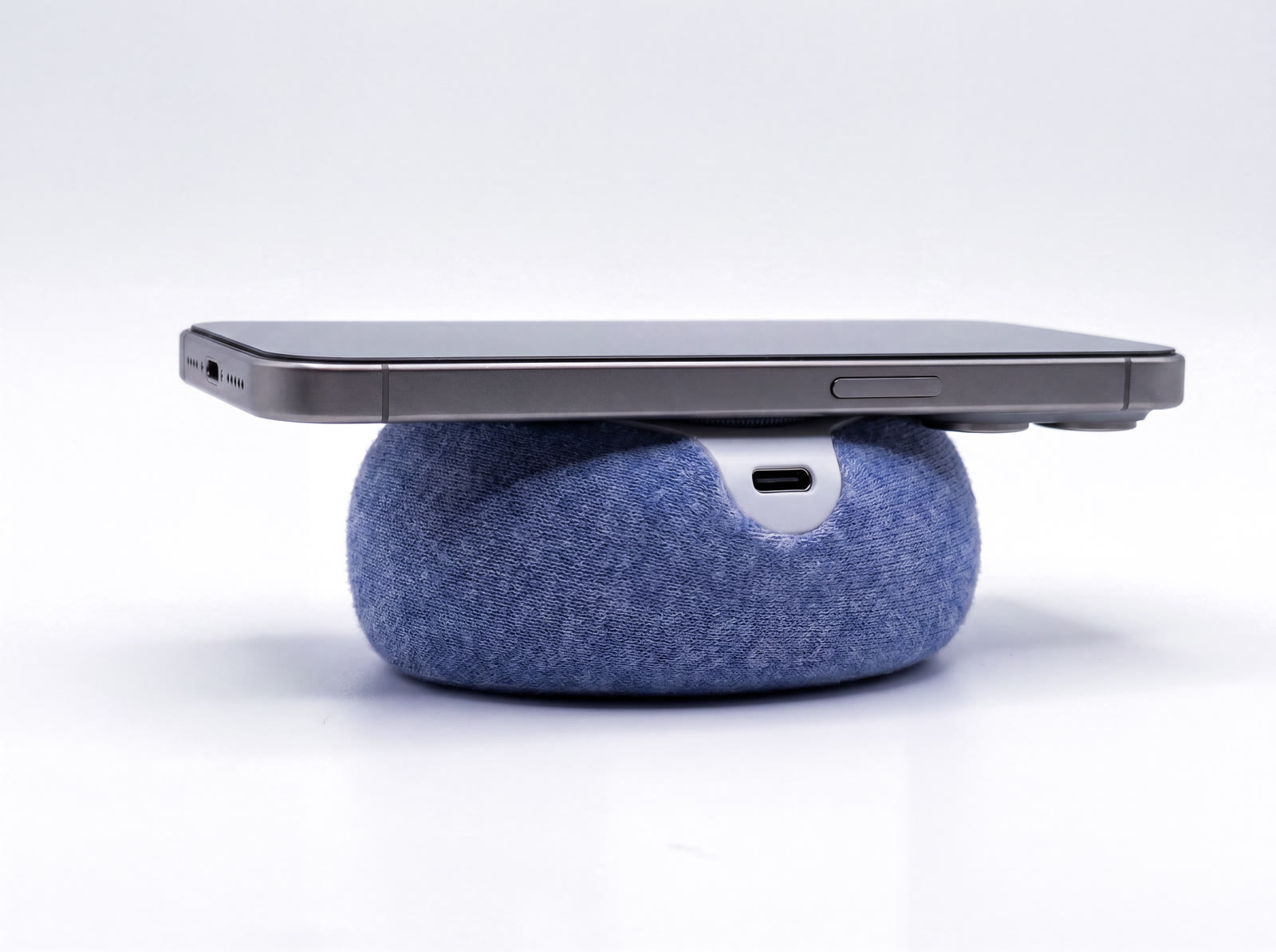
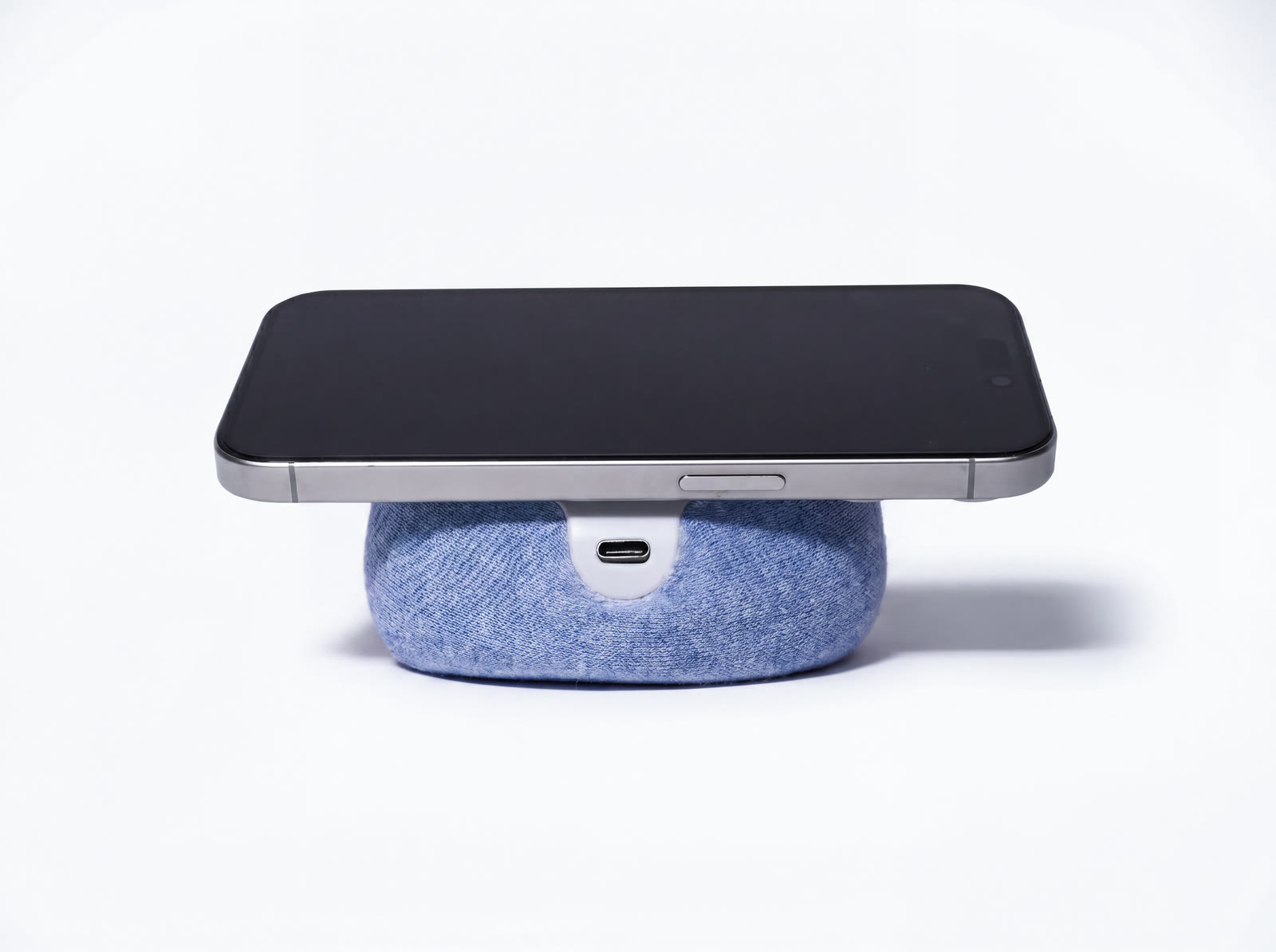
A phone resting flat on NEST
Background and goal

You usually check charging on a screen, but charging also makes heat you can feel.

Phones and chargers show charging with numbers, icons and small status lights, so you have to look to know. Heat is different, because you can notice it with your hand without looking. The project set out to make a charger you understand by touch, and it had four goals.

  • ApproachableIt has no lights and no numbers.
  • TactileThe surface is soft fabric.
  • IntuitiveYou adjust it by pressing, not through settings.
  • PersonalIt keeps the shape you give it.
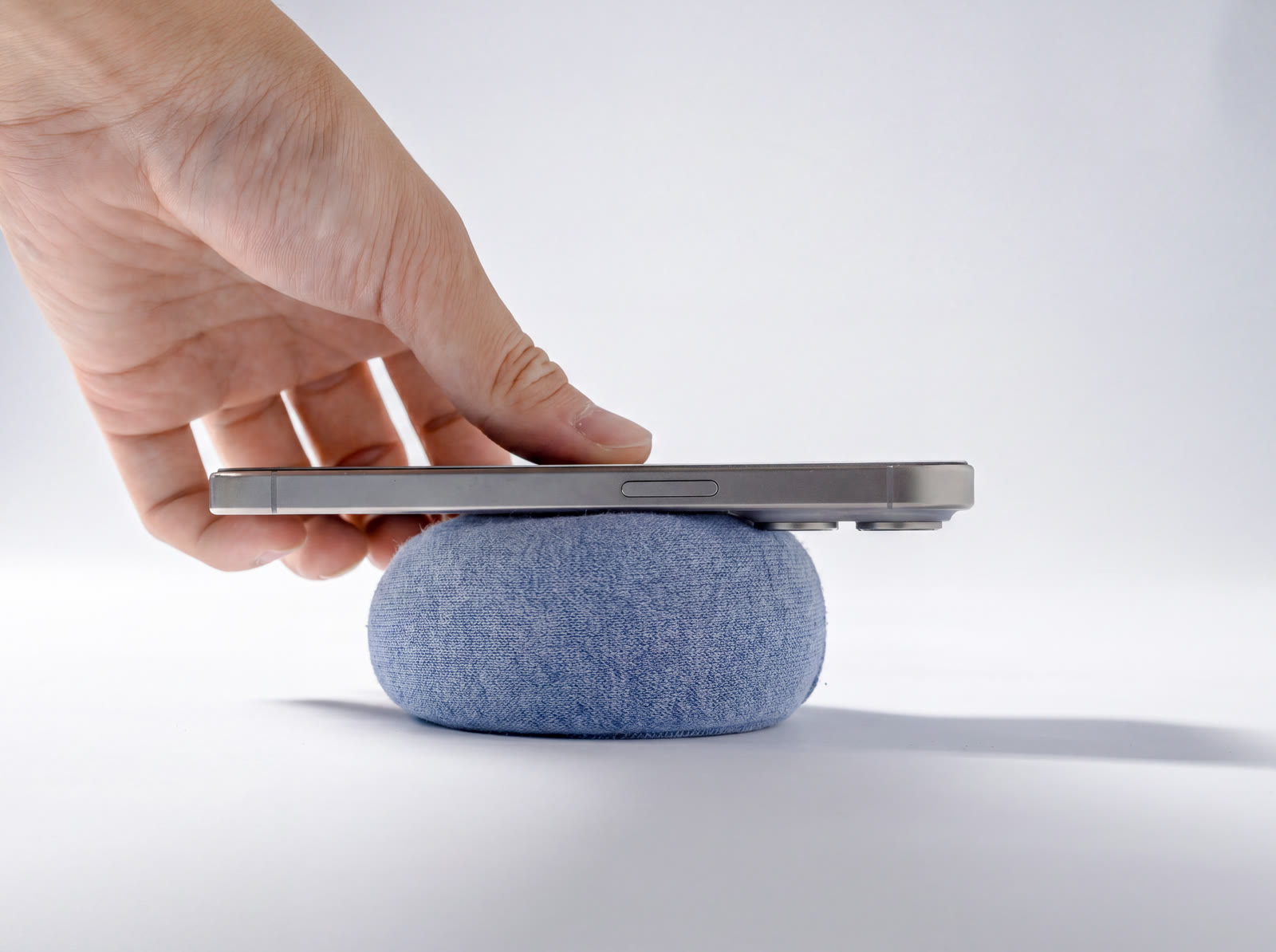
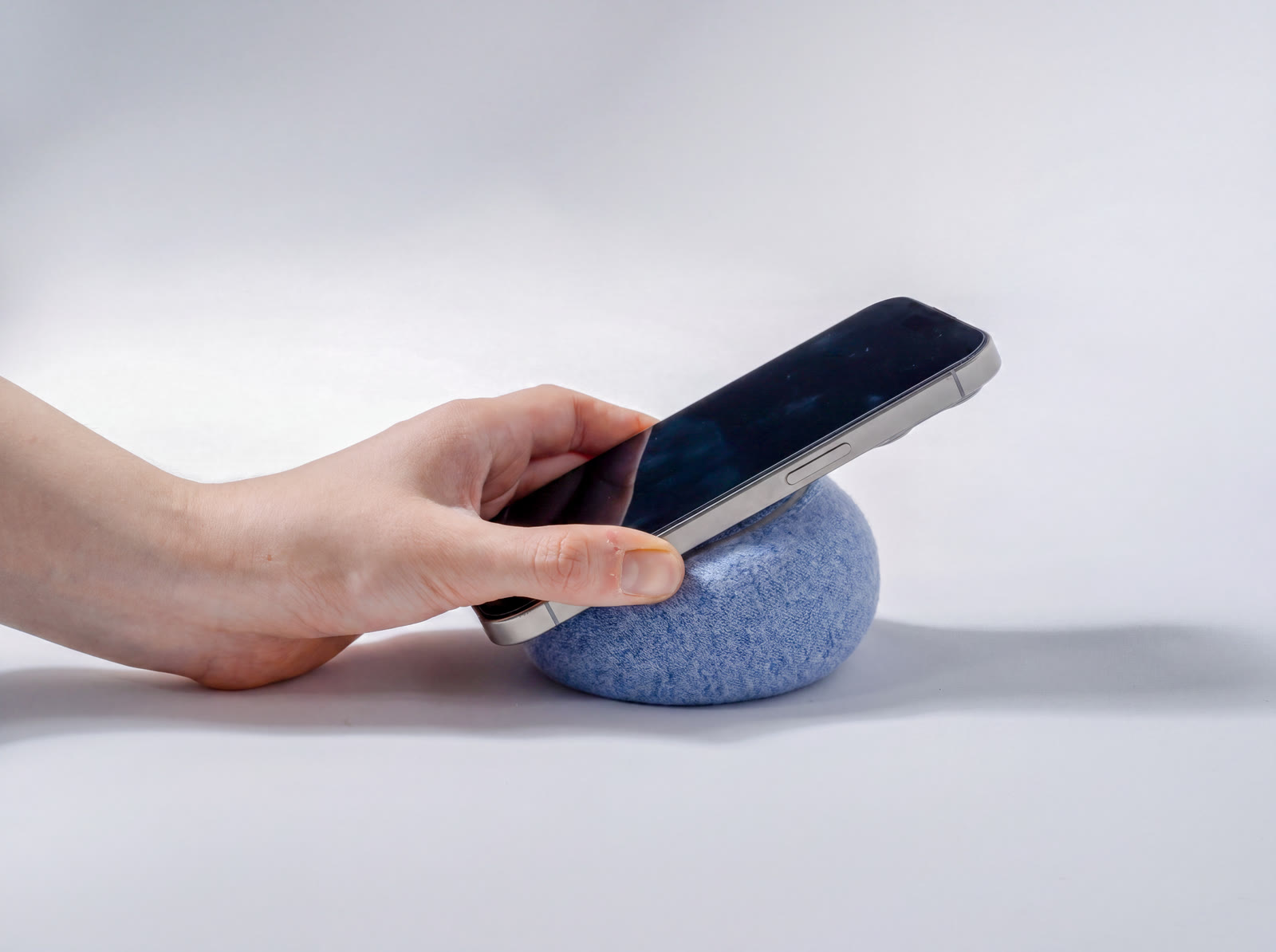
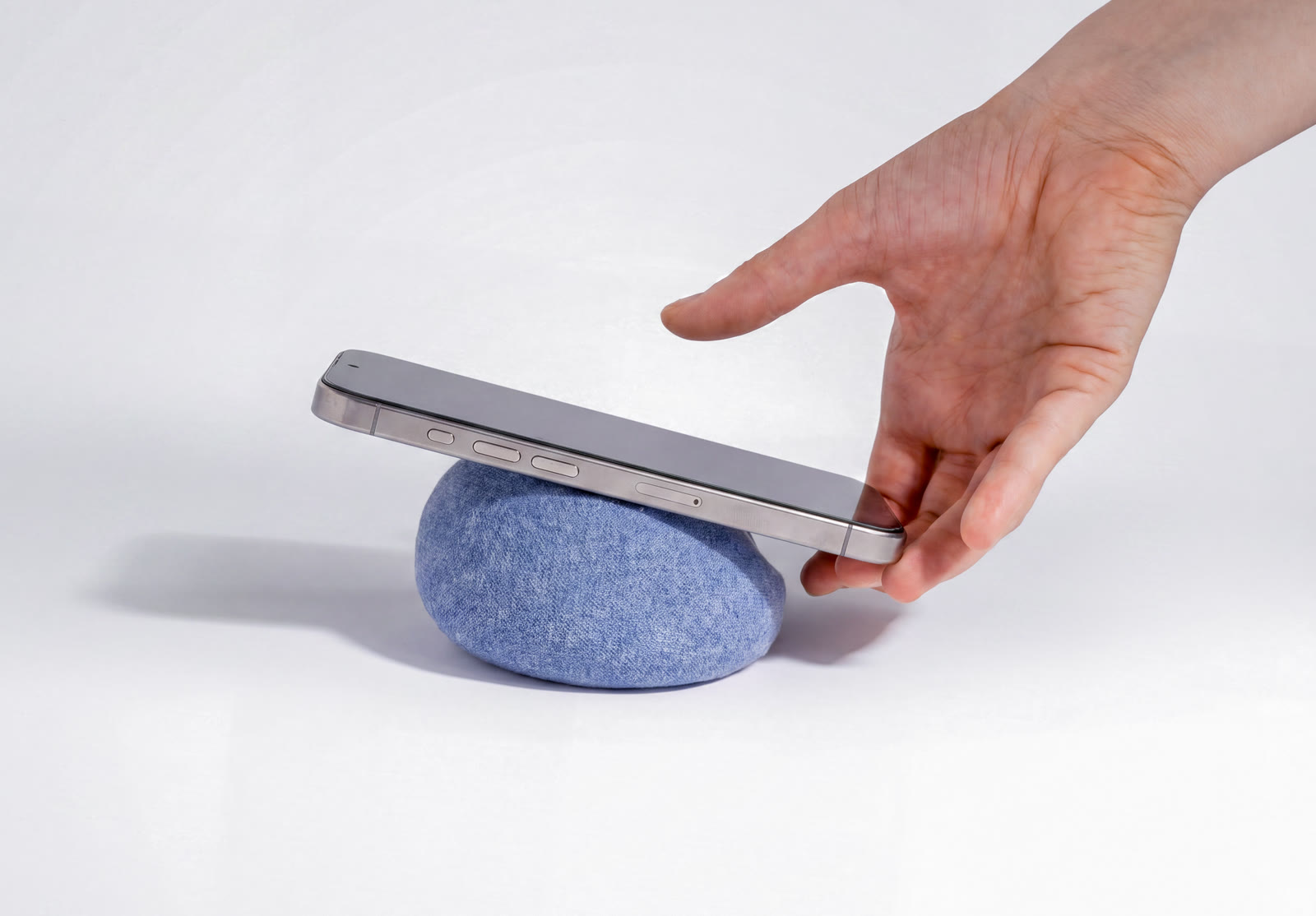
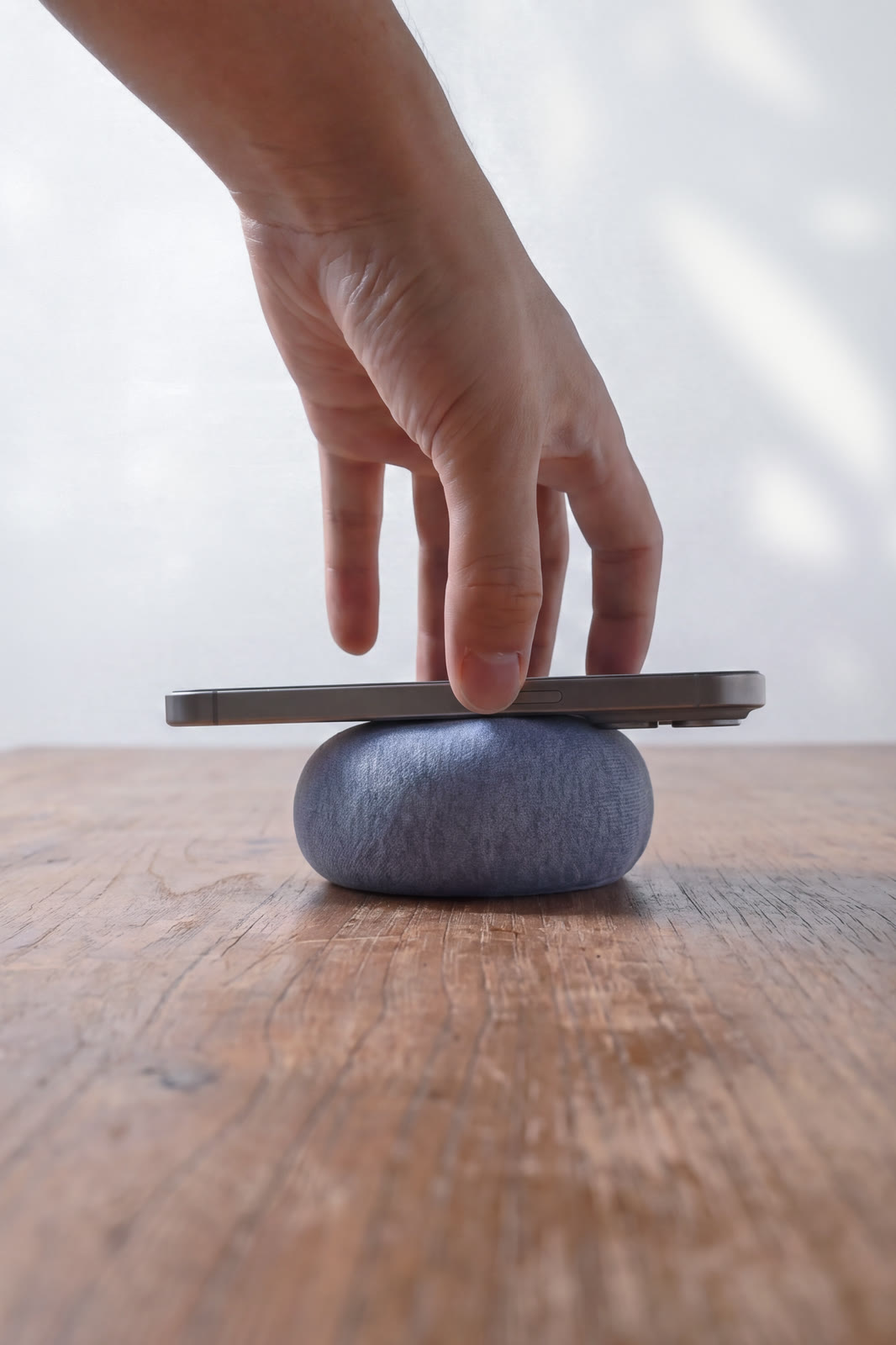
A hand lowering a phone onto NEST
A phone slid onto NEST from the side
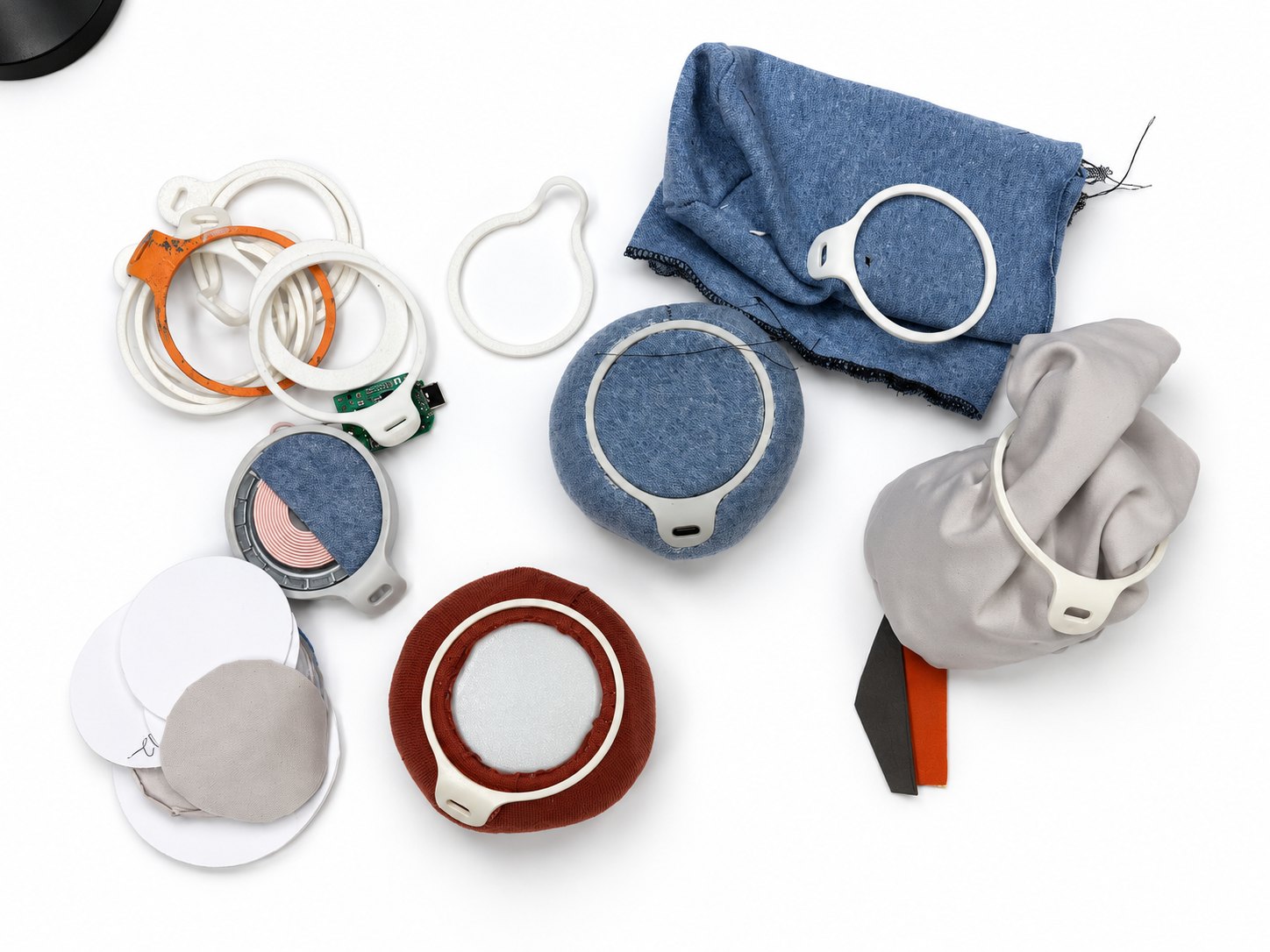
Prototypes laid out: printed rings, knit and fabric skins, a charging coil and paper templates
Process · rings, skins and cores
Process

Wax was chosen for the core after several skins and fillings were tested.

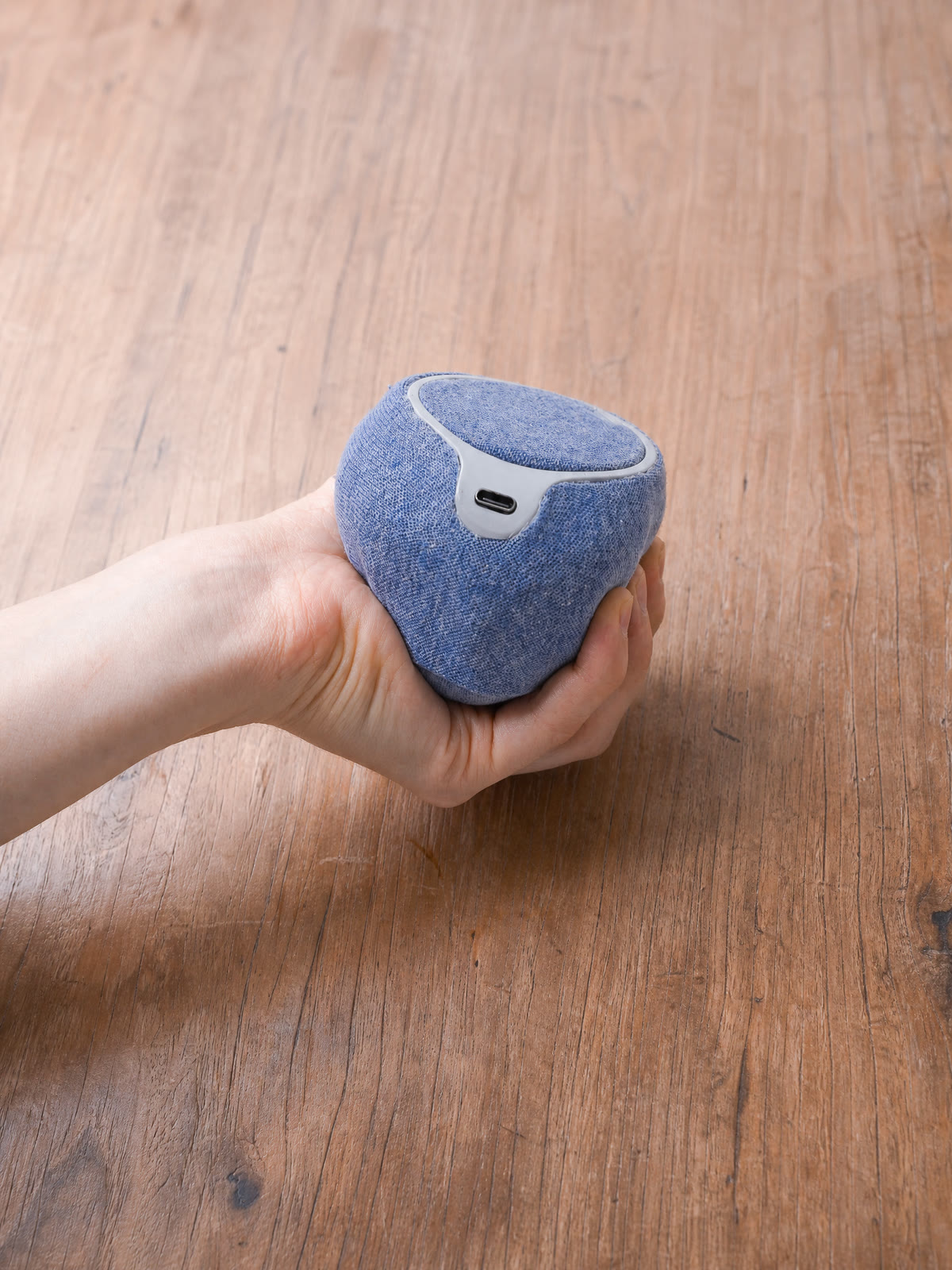
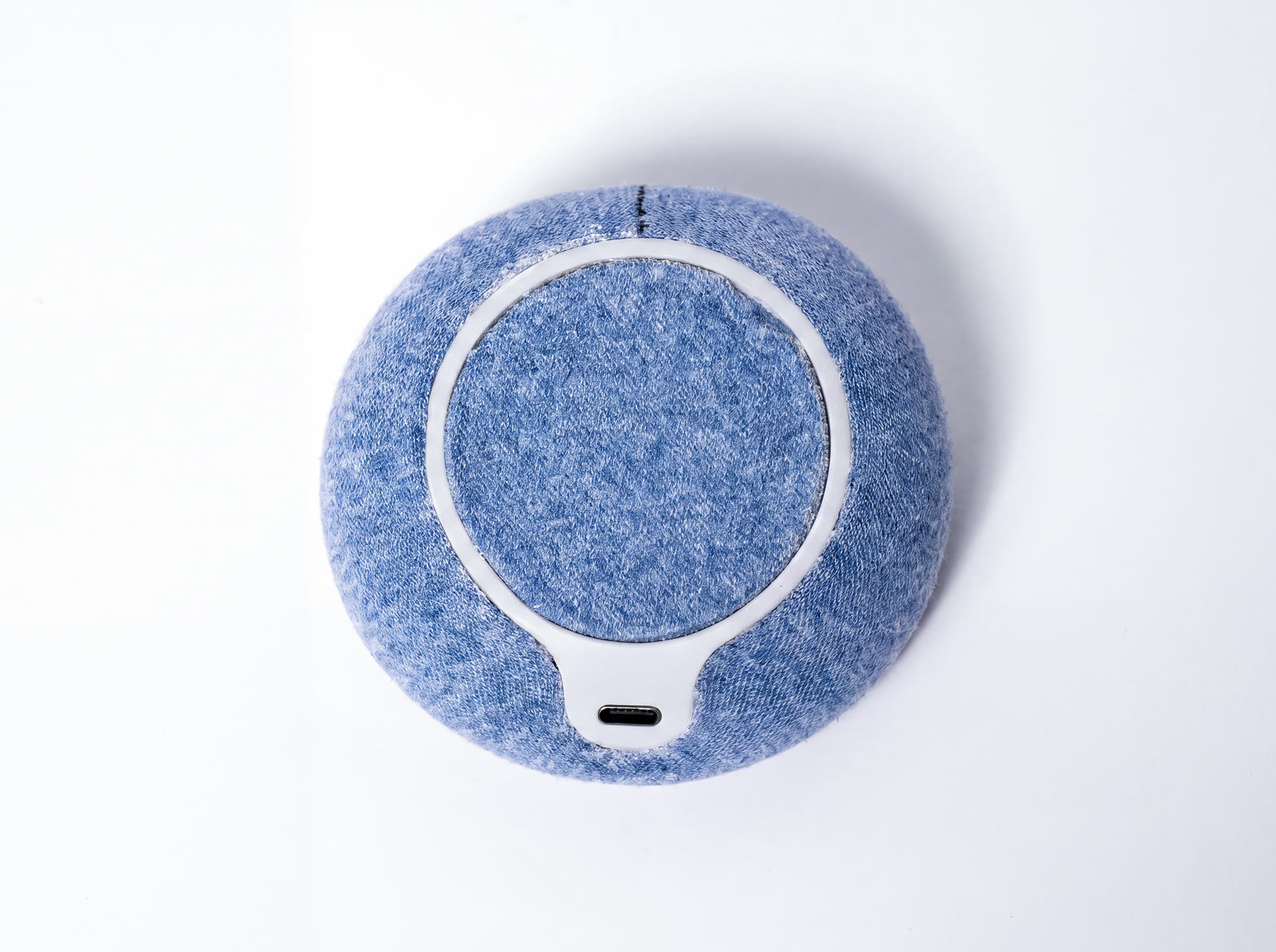
The tests for the outer skin covered latex, TPU (a flexible plastic), silicone and knitted fabric. The tests for the filling covered magnetic beads, steel balls, a thick liquid and wax. Wax gives way when you press it and then stays put under the weight of a phone. The final core is 250 g of microcrystalline wax mixed with 30 g of mineral oil, sealed in a film bag and covered with a two-way stretch knit. A rigid PLA ring on top holds the MagSafe module, and the USB-C port is set into the side of the ring.

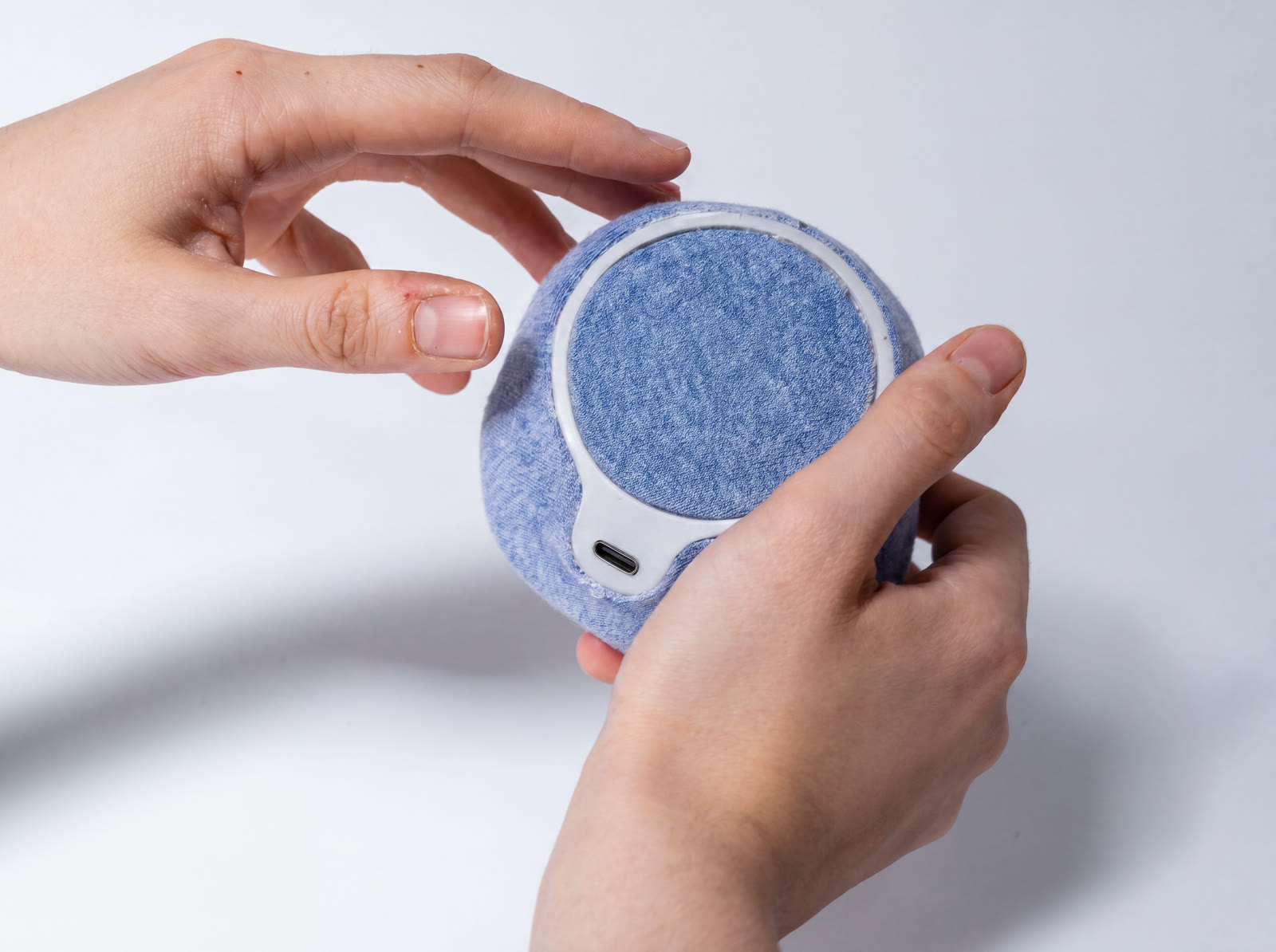
A thumb pressing into NEST
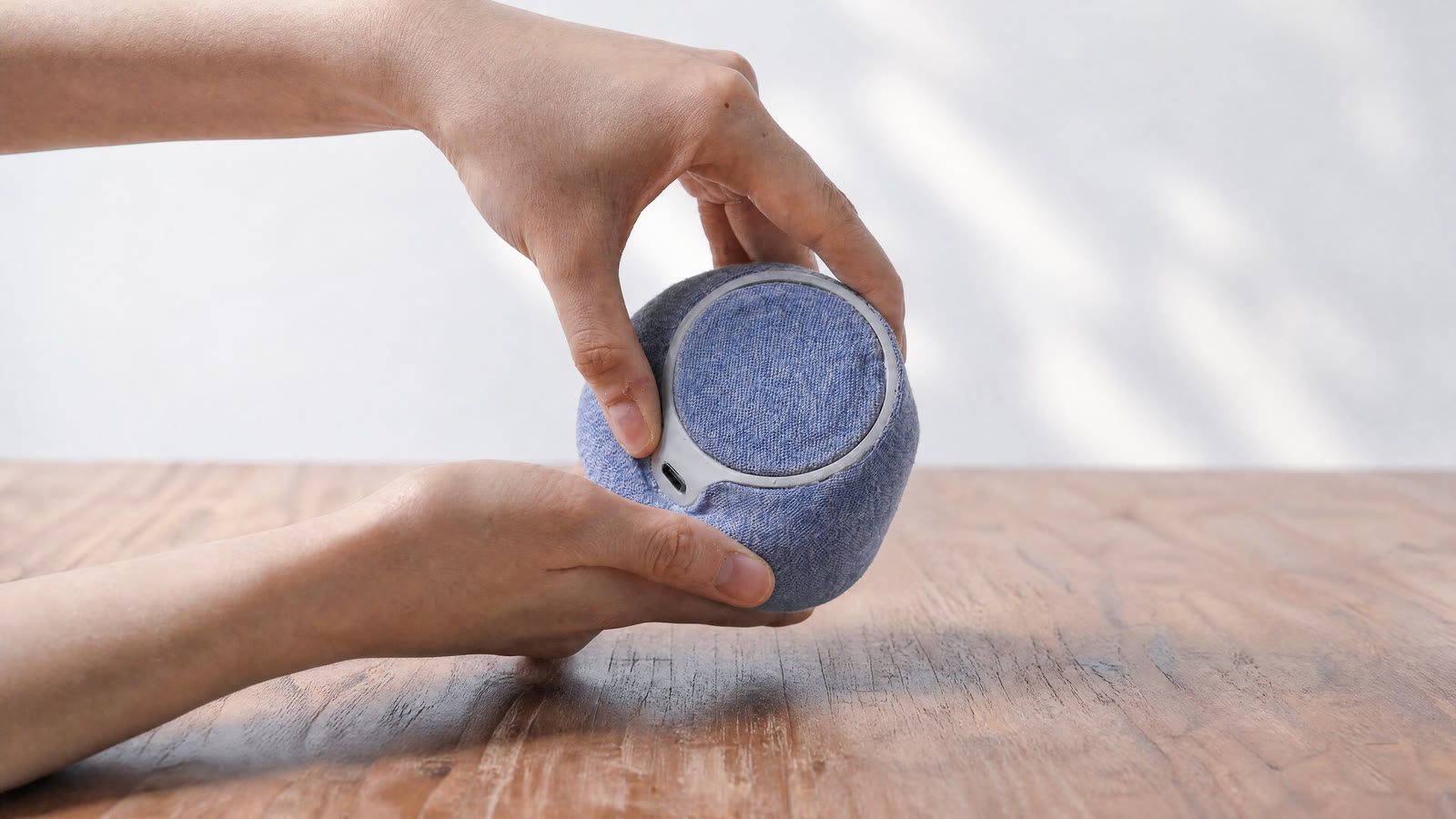
Two hands shaping NEST
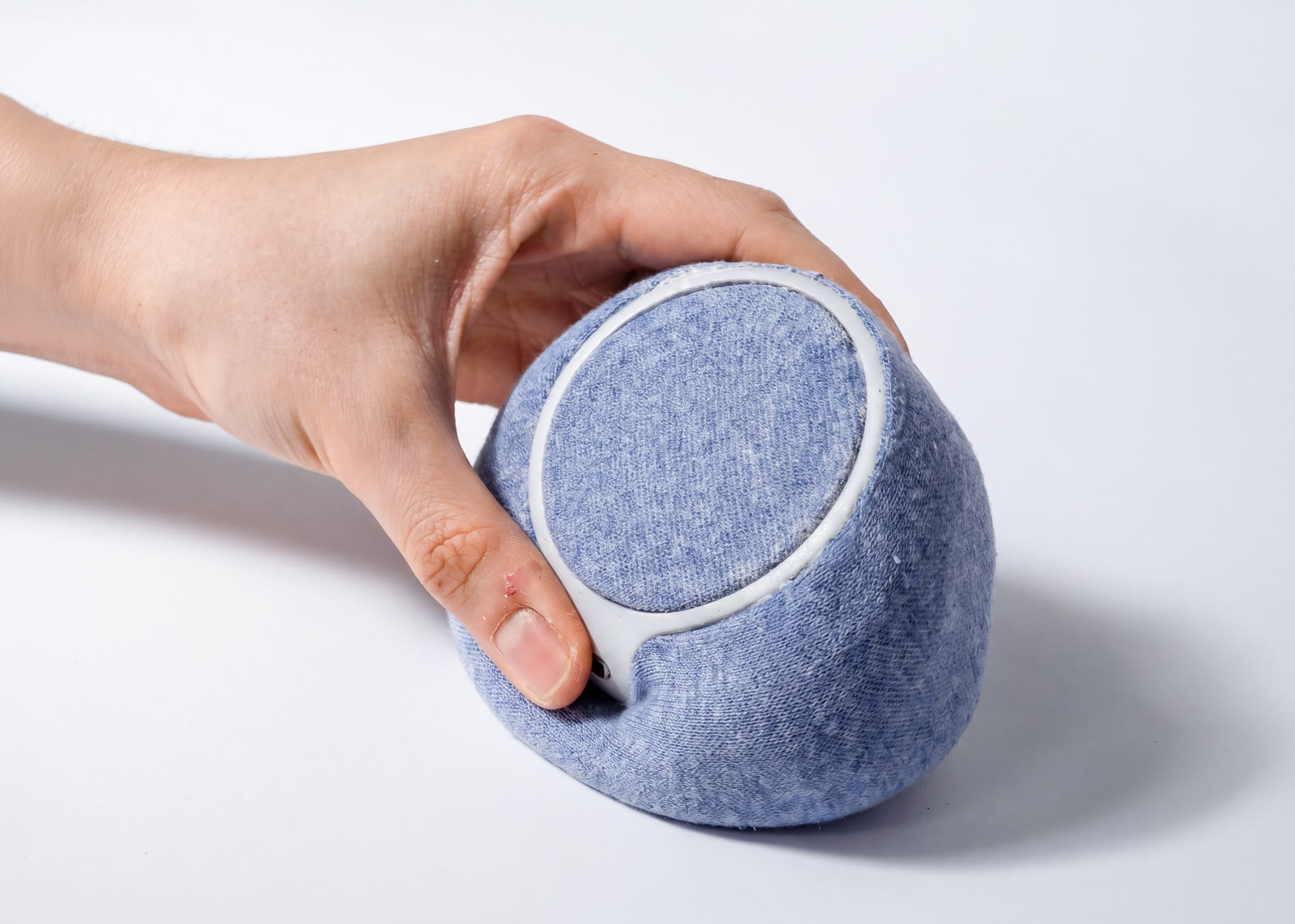
NEST tipped back in one hand
Product

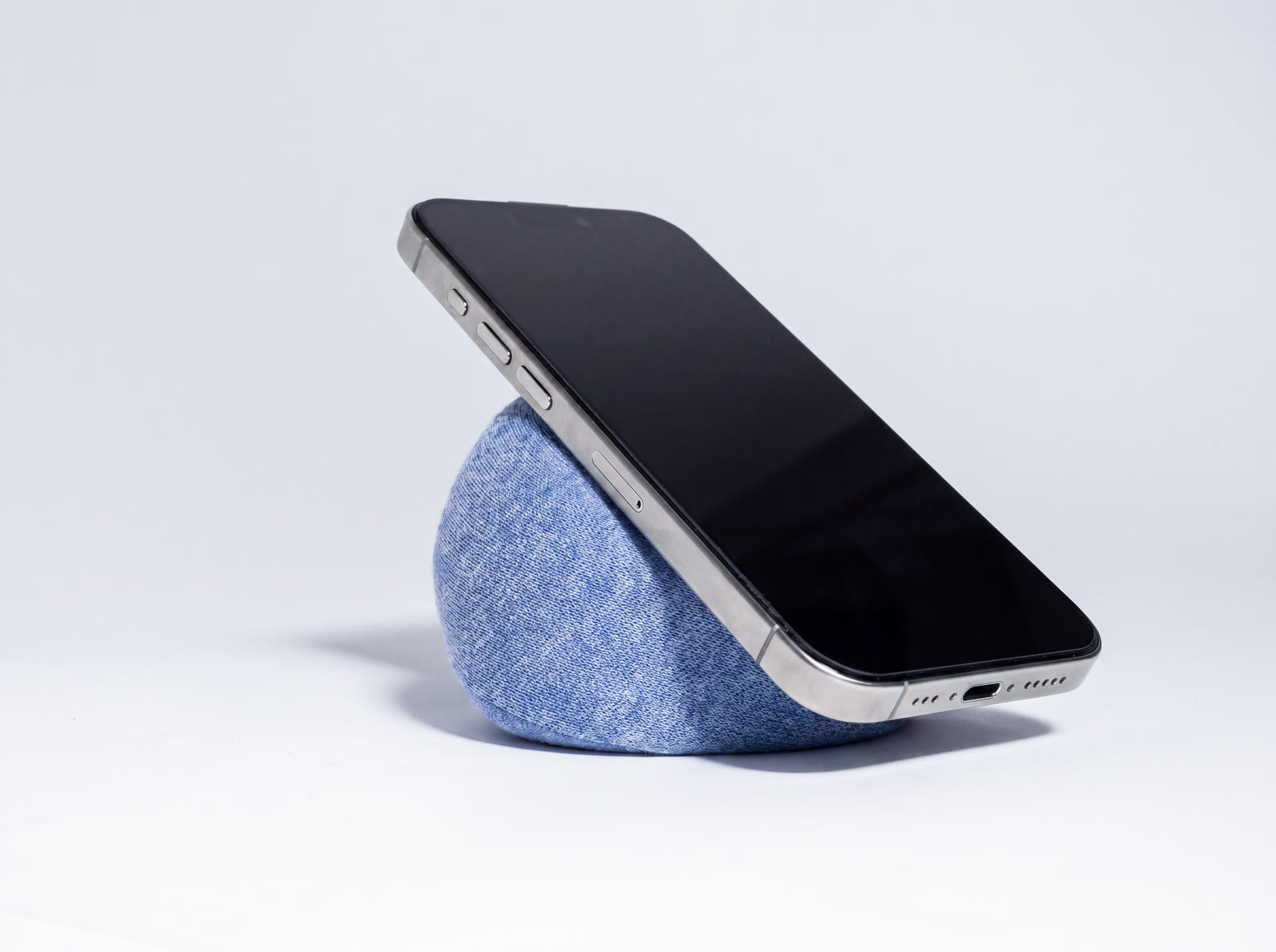
You press the phone to the angle you want, and NEST keeps it there.

This works at room temperature, so the phone can lie almost flat or lean up towards you. While it charges, NEST gets slightly warm. That warmth is the only sign that it is working, because the charger has no light and no screen.
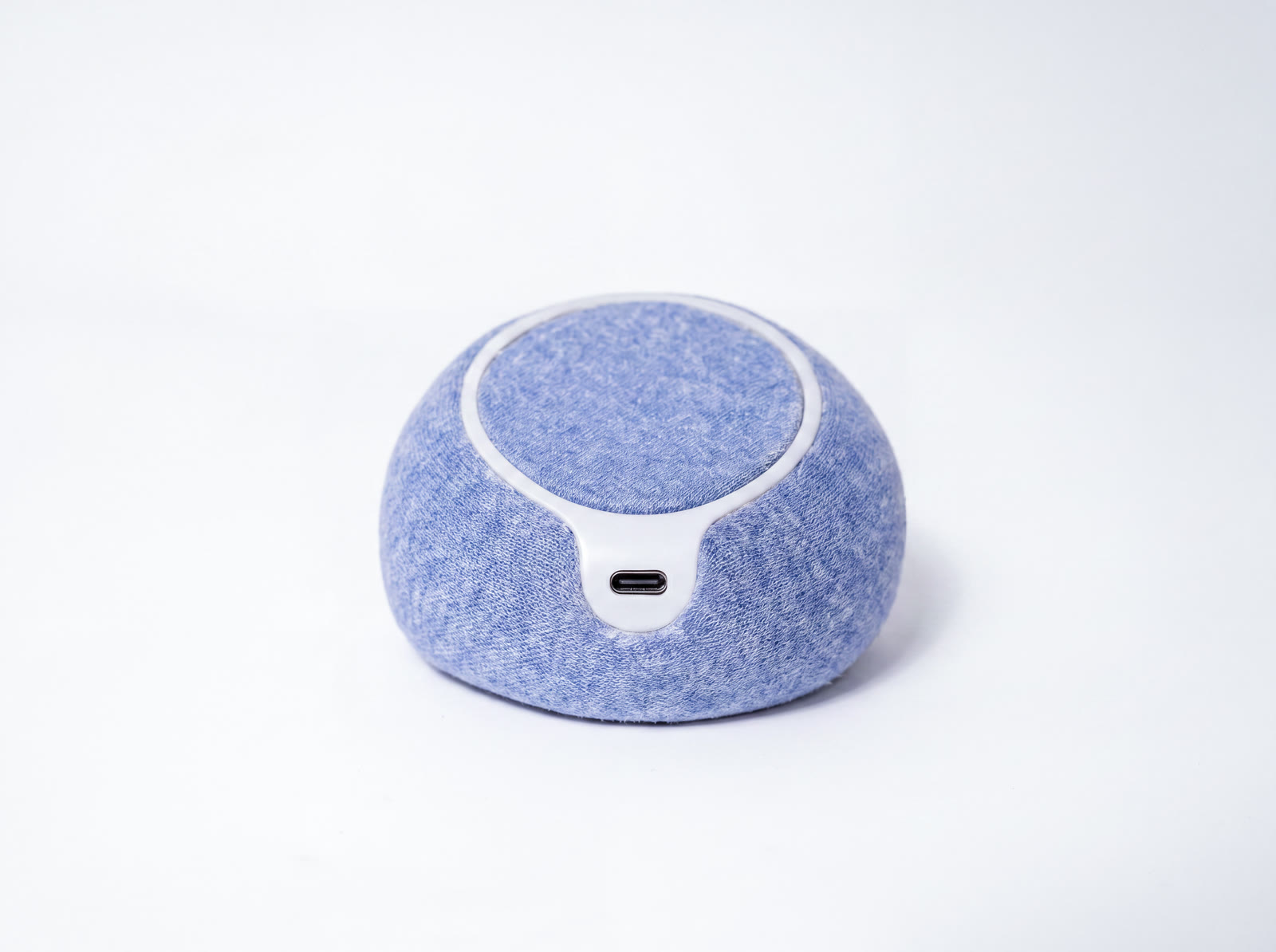
NEST from the front, with its USB-C port
Front · USB-C in the side of the ring
NEST from above, a rigid ring set into blue textile
Top · rigid MagSafe ring
Two hands pressing NEST on a wooden table
Pressed into shape on the table
NEST from behind, cable leaving the ring, phone leaning on it
From behind · cable from the ring
A phone lying flat on NEST
Phone lying flat
A phone tilted back on NEST
Phone tilted back
NEST charging a phone through its USB-C cable
Plugged into the ring
A fingertip settling the phone on NEST
A hand setting a phone onto NEST on a wooden table
NEST cupped in a palm above a wooden table
A hand pressing a phone down onto NEST
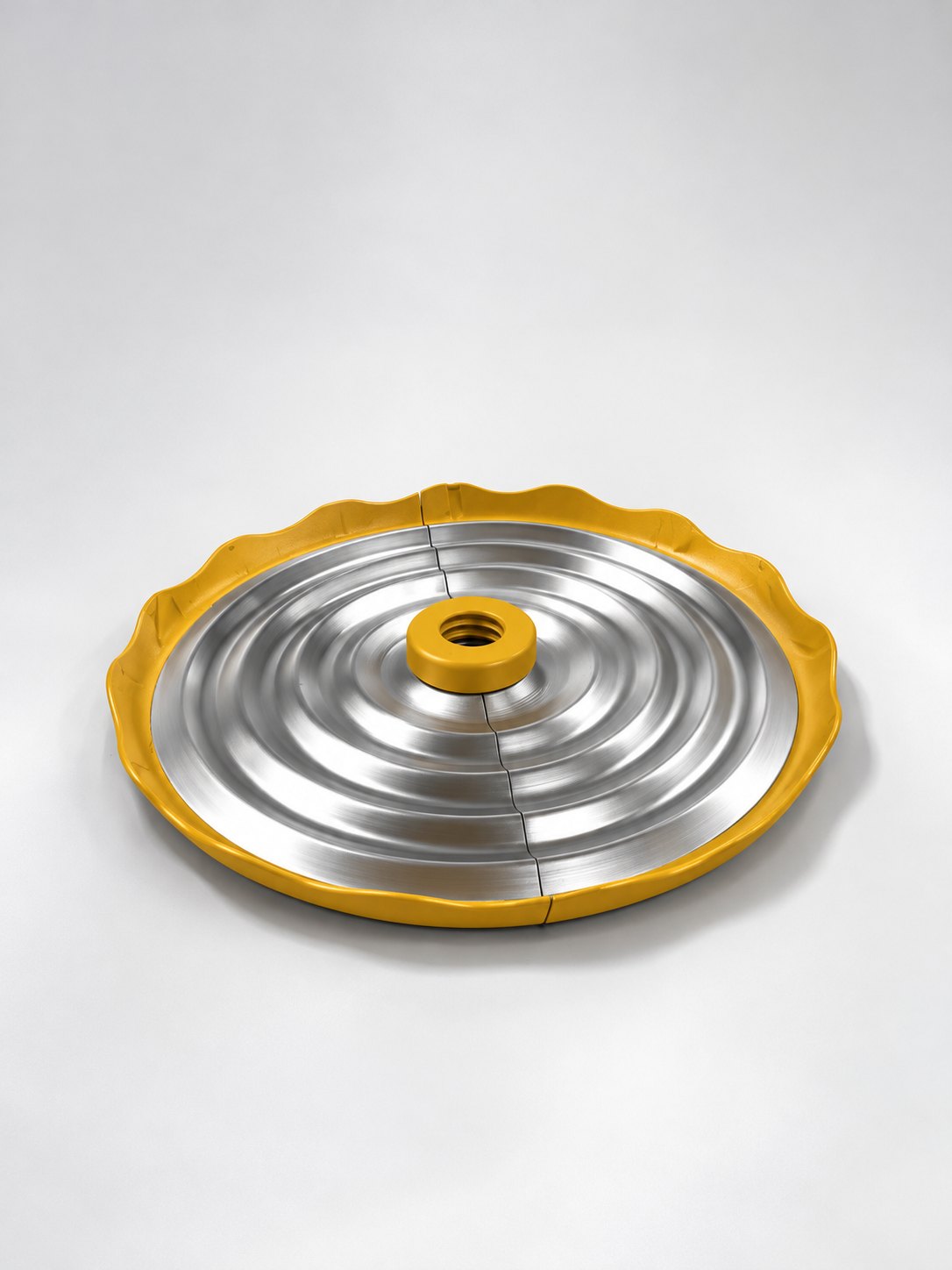
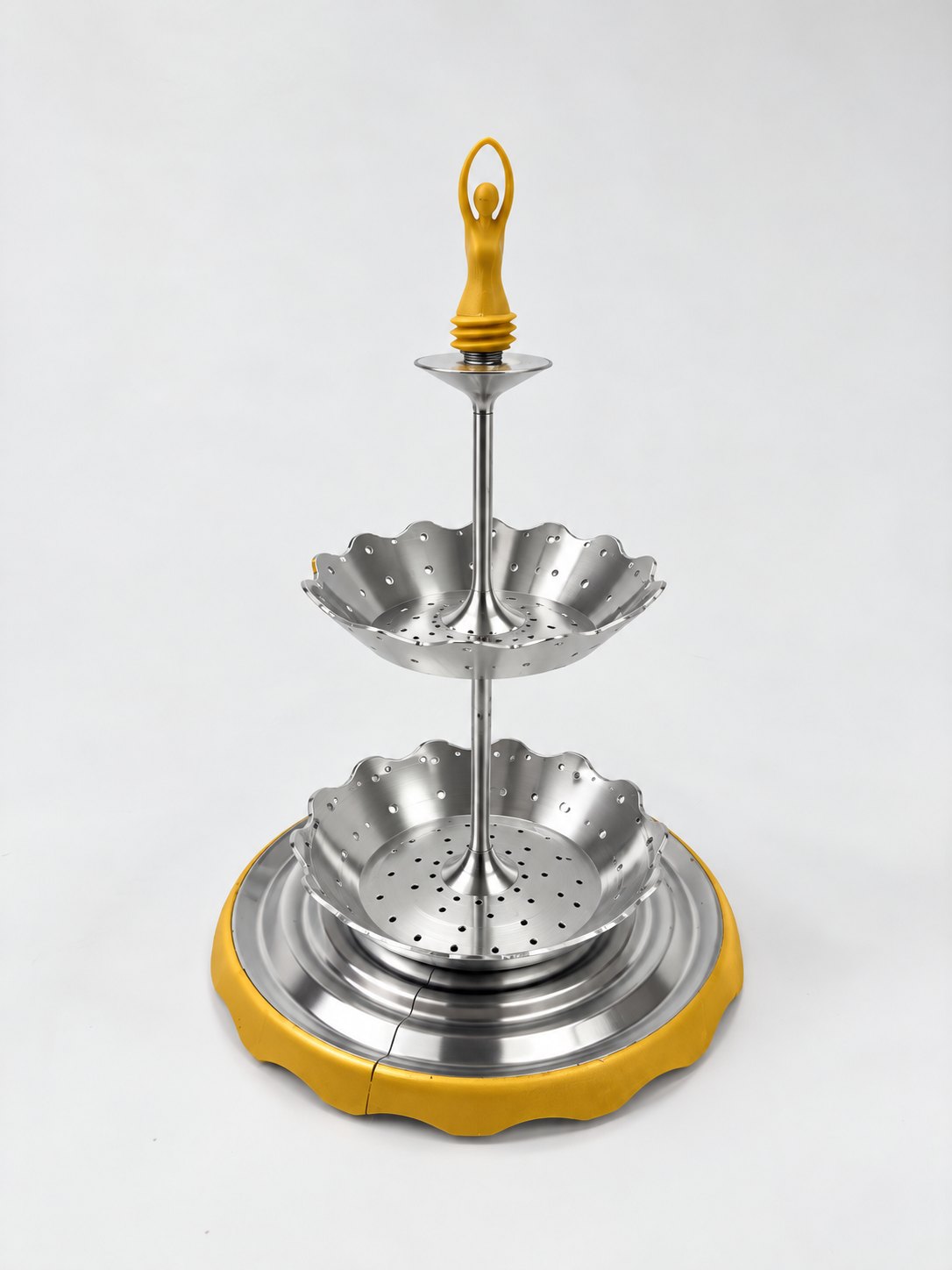
Vaporina assembled: two steel trays under the yellow “Skirt” lid, dancer handle on top
The “Skirt” lid resting on top of the tower
Background and goal

Alessi’s brief asked for ways to use less energy when cooking.

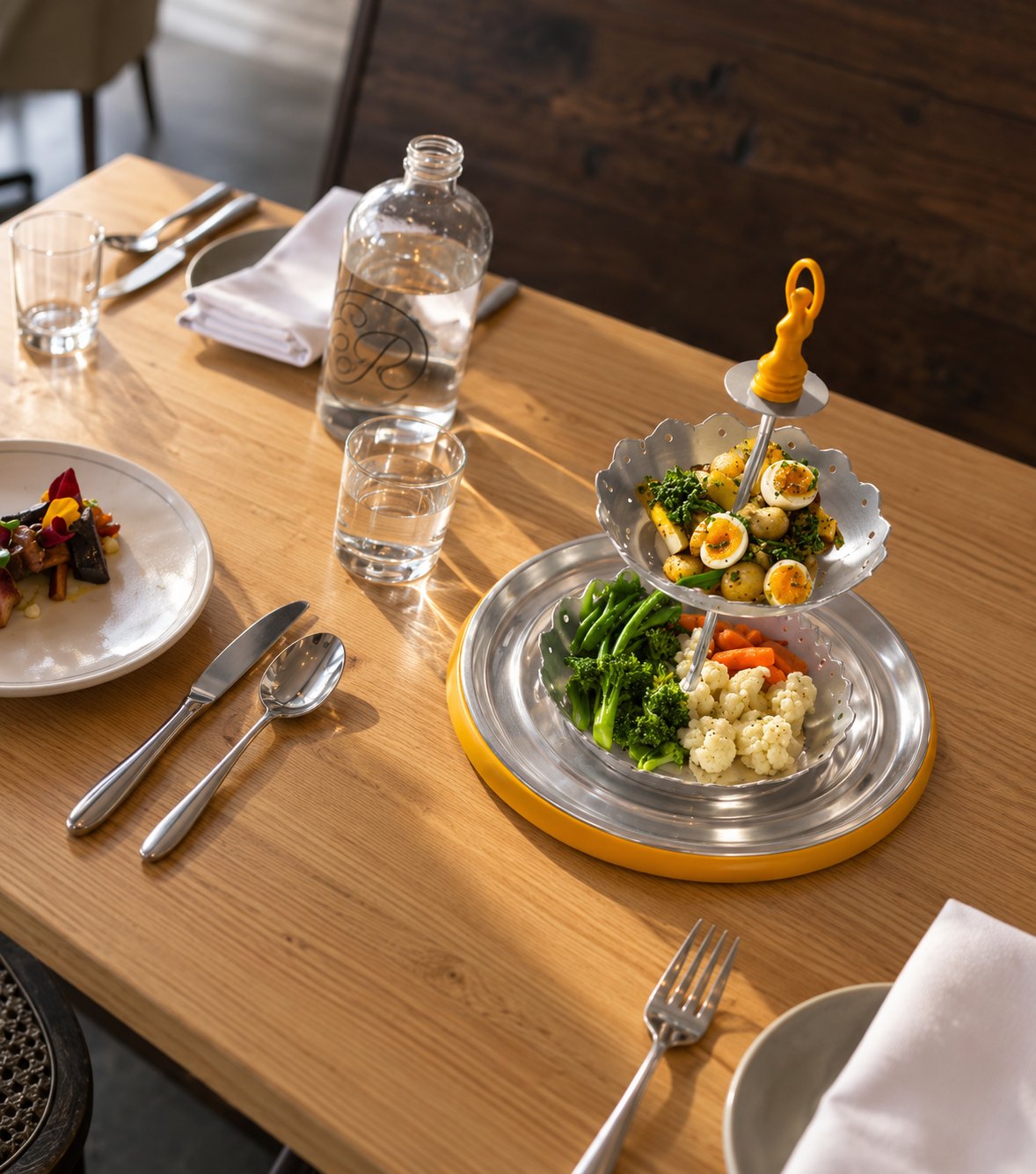
When water boils on the stove, most of its steam escapes and that heat is lost. Vaporina puts the steam to use: the water at the bottom of the pot cooks one dish, and the trays above it steam a second dish on the same burner. A second goal was that the stack should look good enough to serve from, so the food does not need to move to another dish.

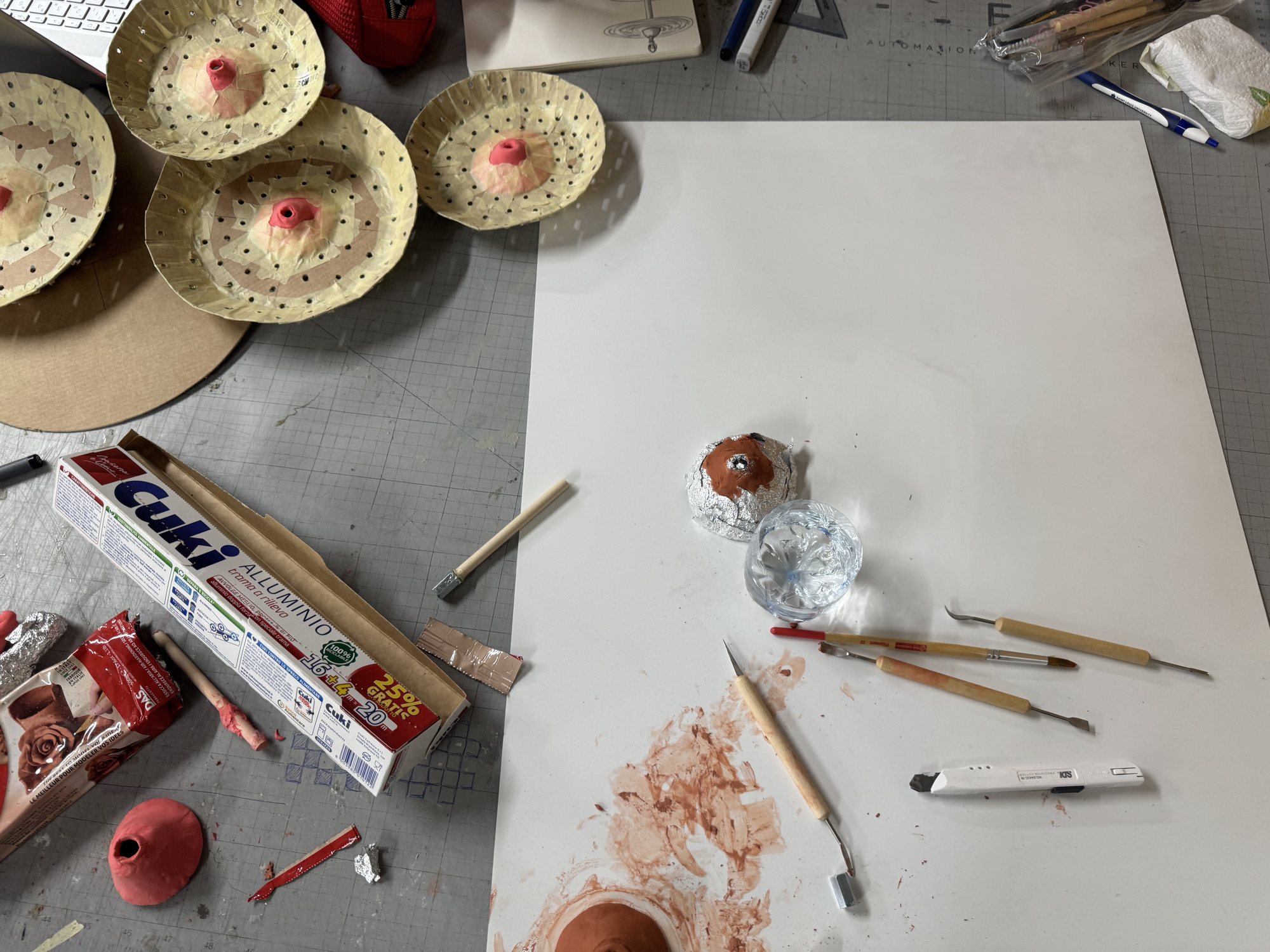
Workbench with paper prototypes of the trays and modelling tools
Process · paper prototypes
Process

The trays, the lid and the handle were first made in paper.

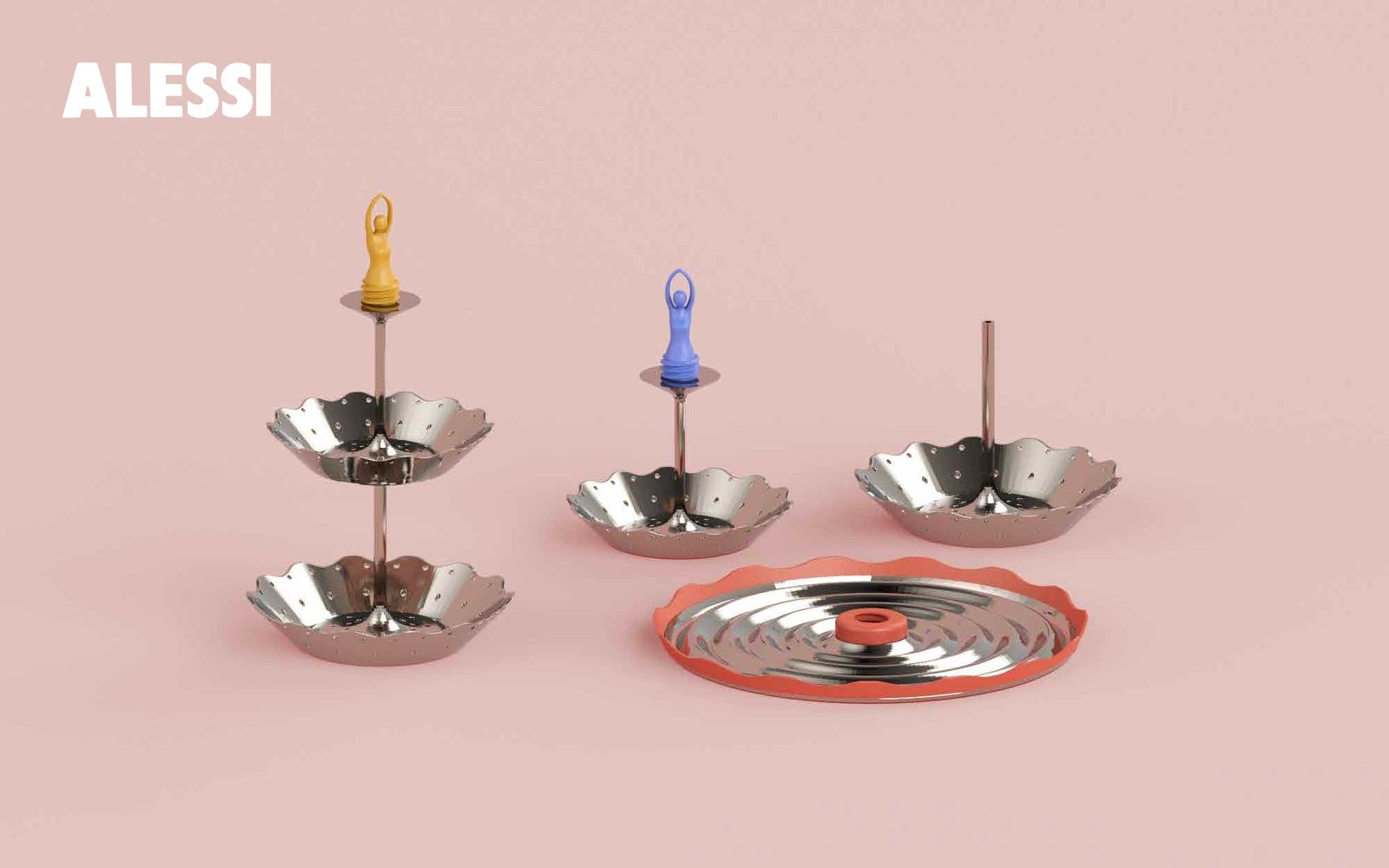
After the paper prototypes, the design was modelled in 3D and rendered in a range of colours.

Renders in three colours on a pink background, with the Alessi logo
Renders in three colours
Product

One Vaporina fits several pot sizes and lifts out in one piece.

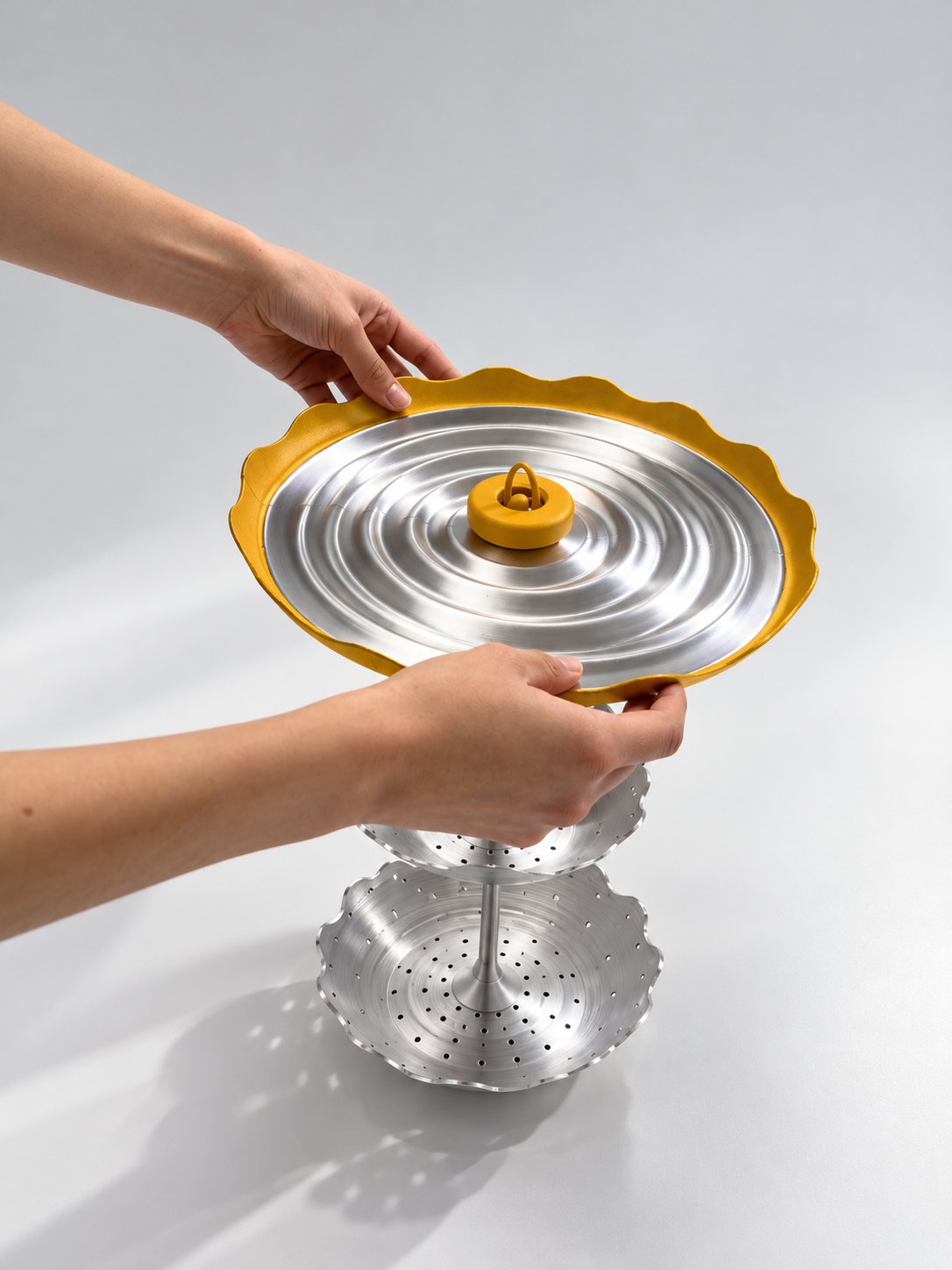
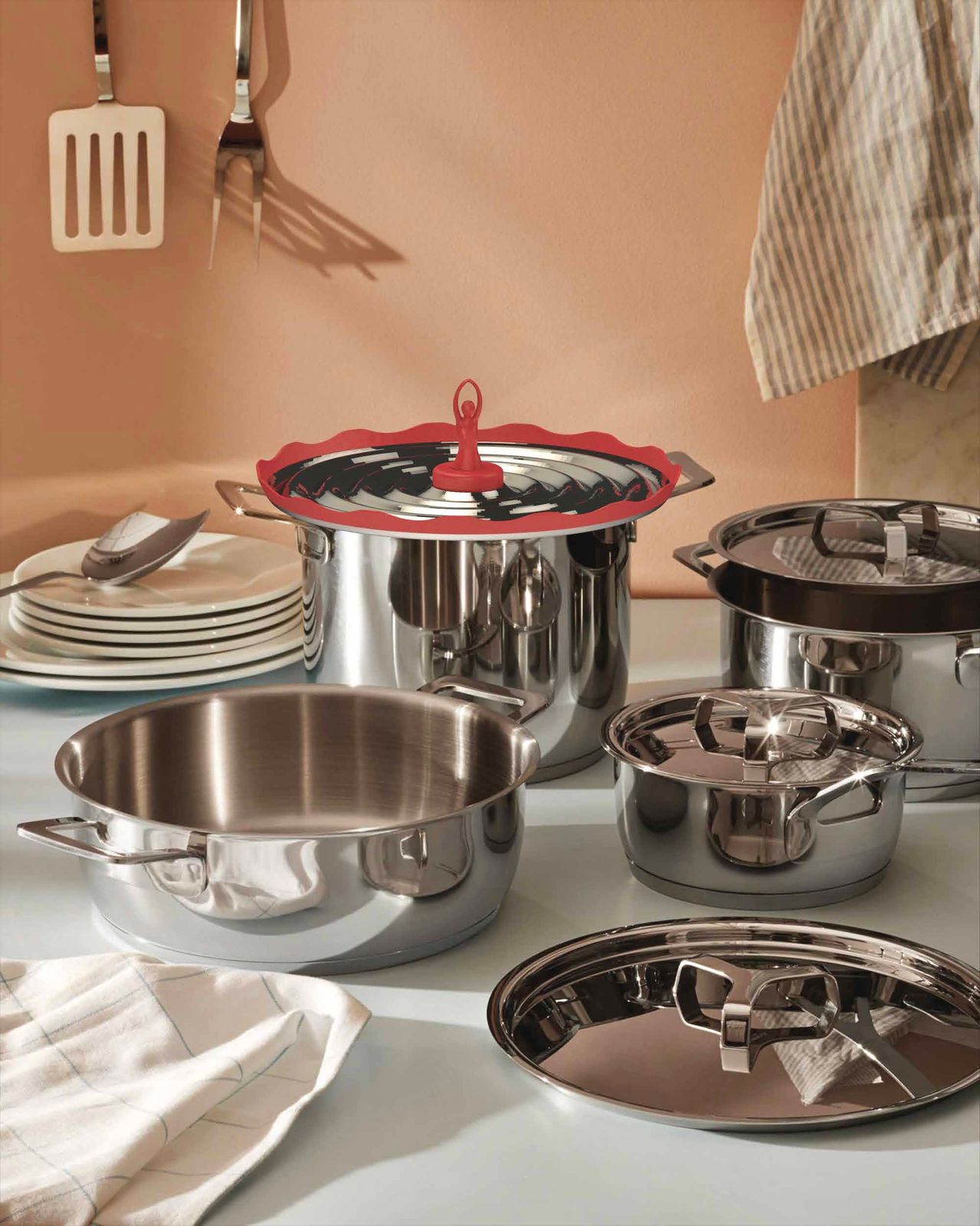
The wavy edge of the “Skirt” sits on pots of the standard diameters. The dancer-shaped handle on top lifts the trays and the lid out together.

Two hands lifting the “Skirt” lid off the tower
Two hands setting the “Skirt” lid onto the tower
Putting the “Skirt” on
The yellow-rimmed “Skirt” lid on its own
The parts laid out: two trays and the “Skirt” lid
Parts
Vaporina in an Alessi pot among steel cookware
Vaporina served on a dinner table
From pot to table
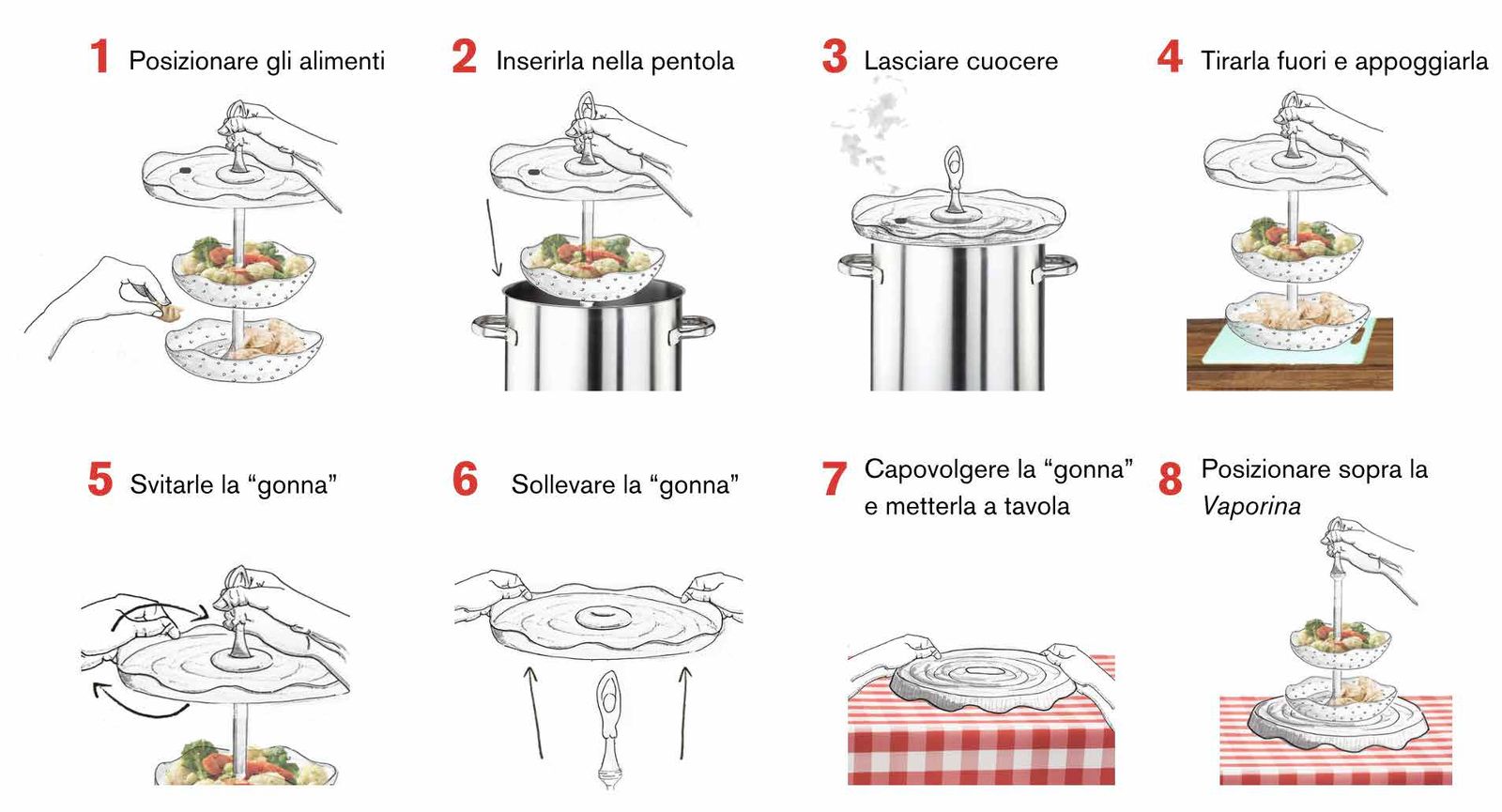
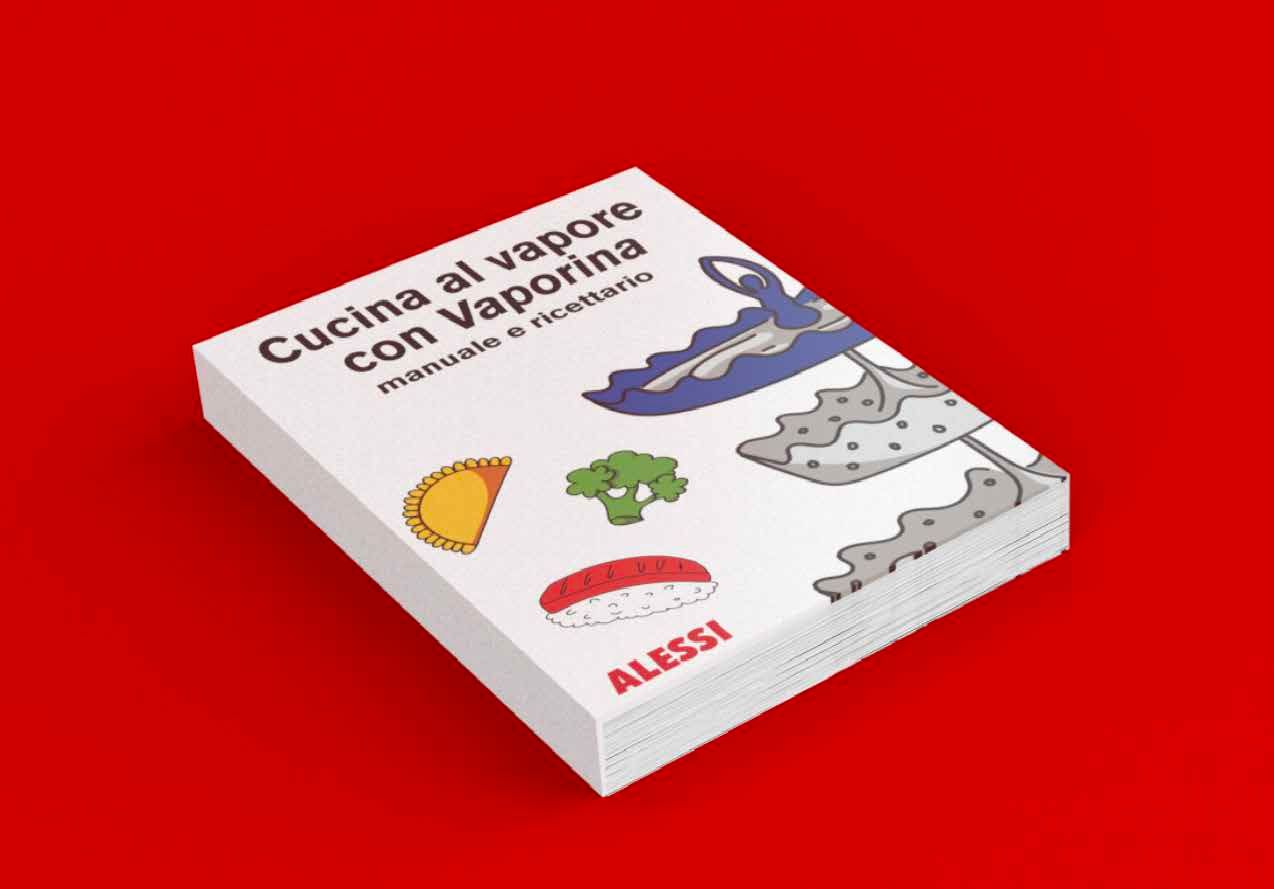
Eight-step illustrated user instructions, a page from the user book
User book on a red background
User book: Cucina al vapore con Vaporina
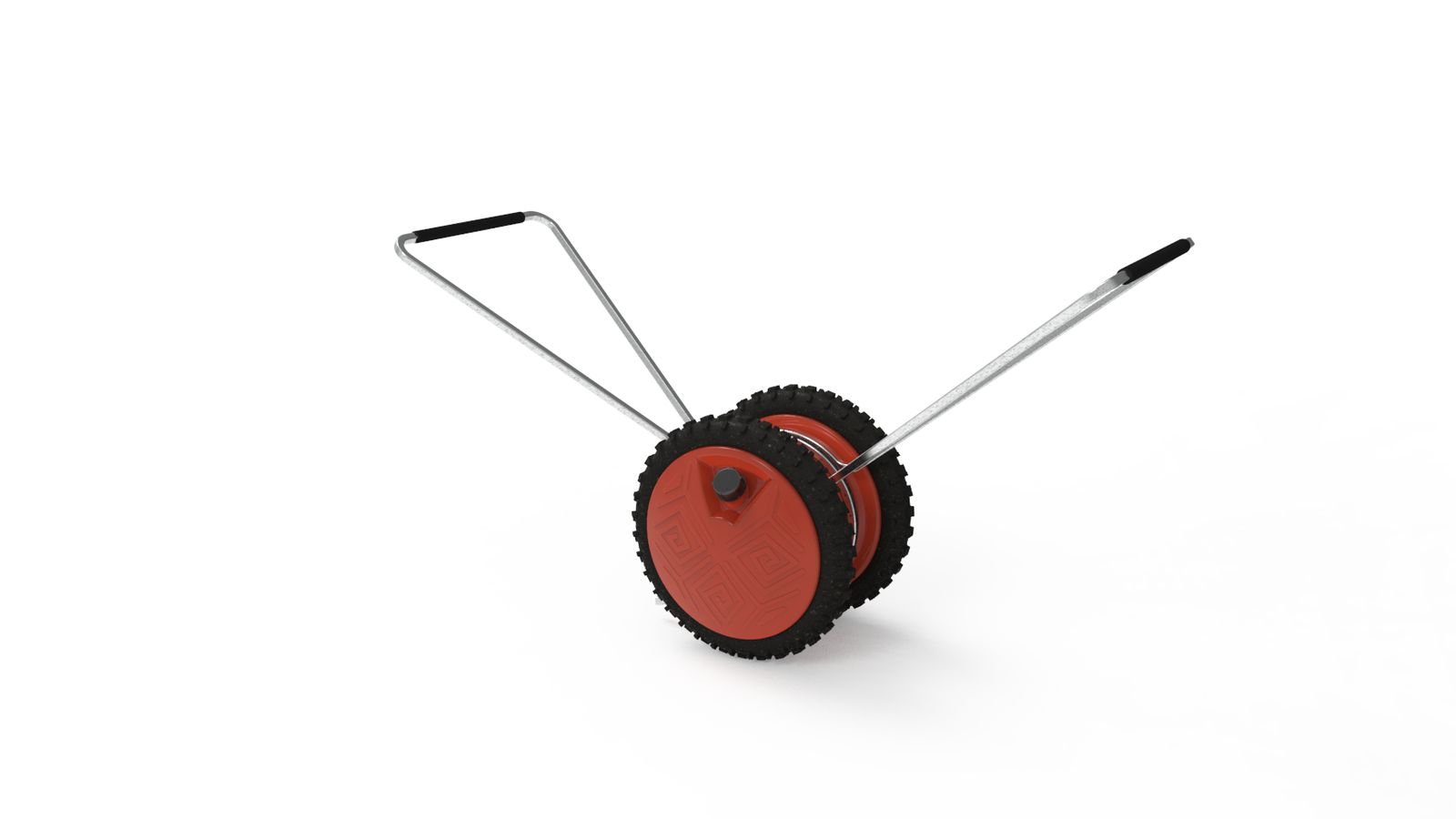
Majiroller with its two long steel handles
Background and goal

In the DRC, most water is still carried home by hand.

People carry it in buckets of 15 to 25 kg, often for half an hour or more over mud and sand, and children often do this work. These figures come from the research annex of the course project. The goal was a roller that lets two children share one load and that costs as little as possible to make.

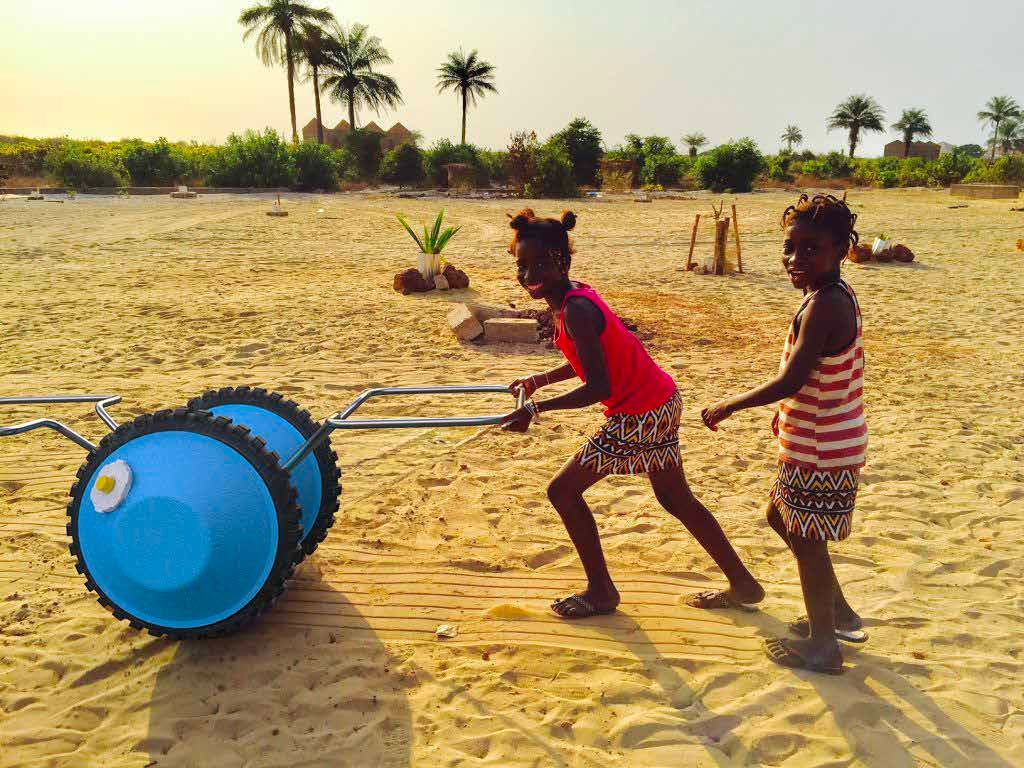
Two children pulling a water roller across sand
Two children pulling a water roller
Process

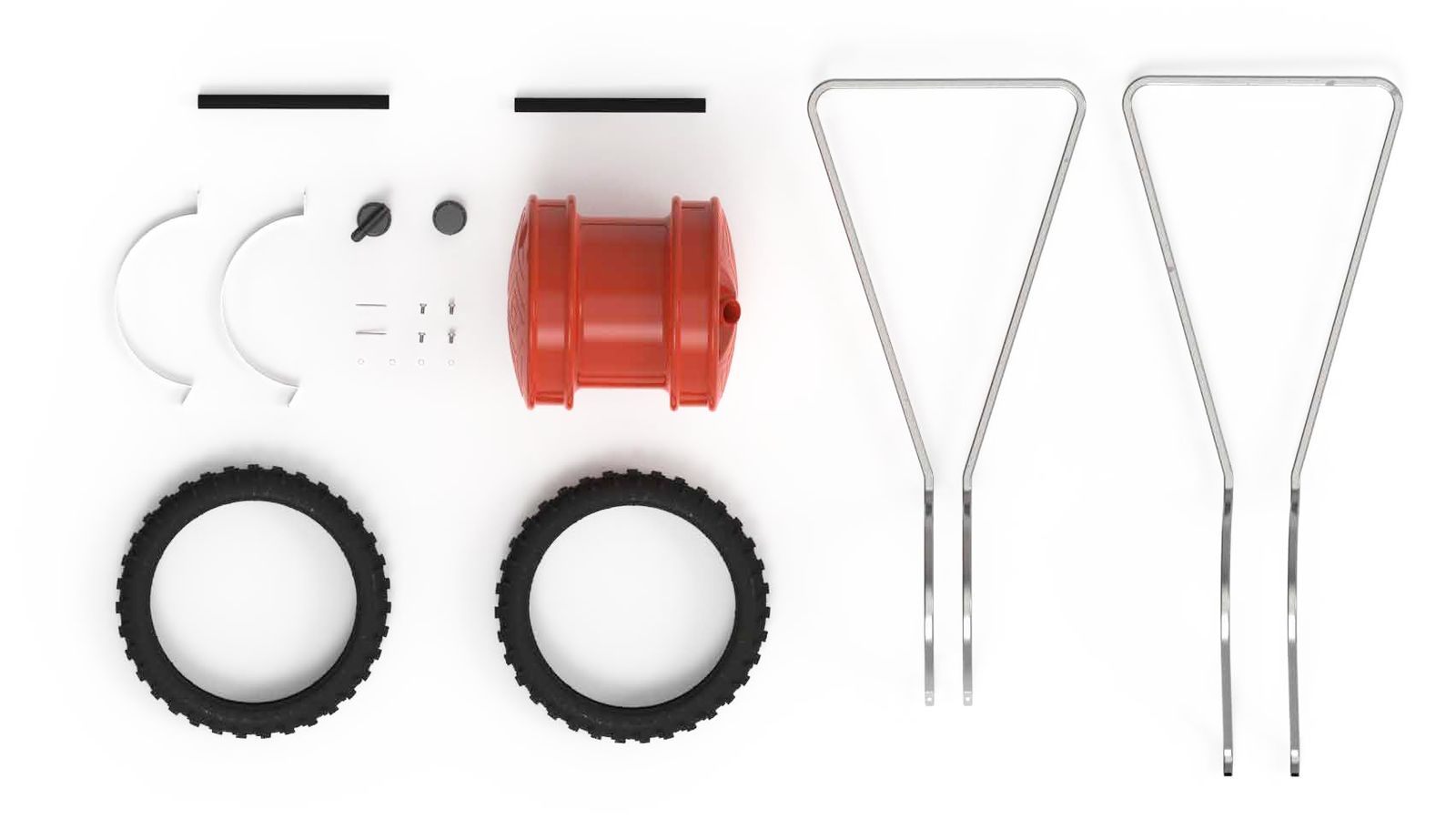
The roller is made from three kinds of parts.

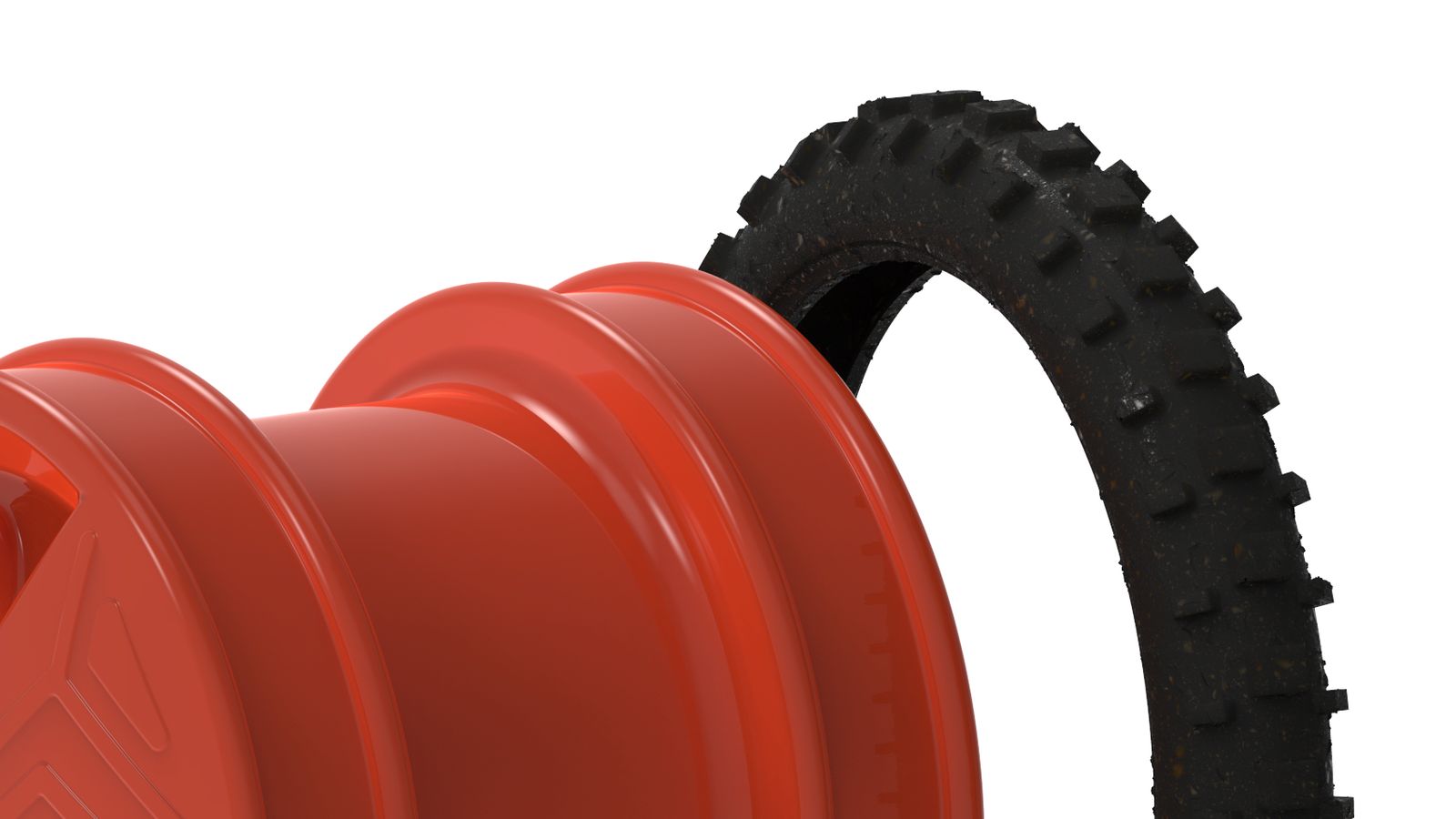
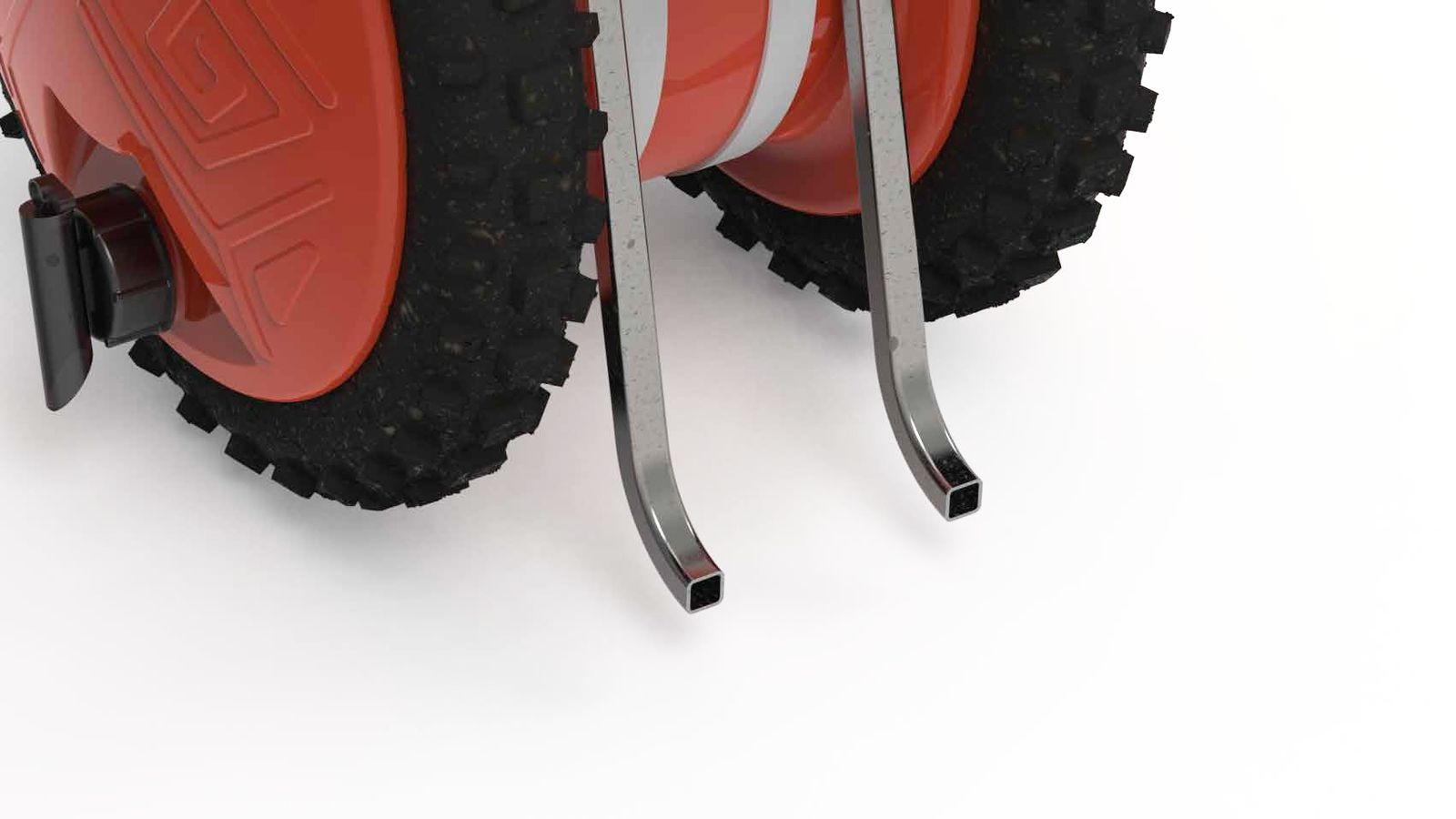
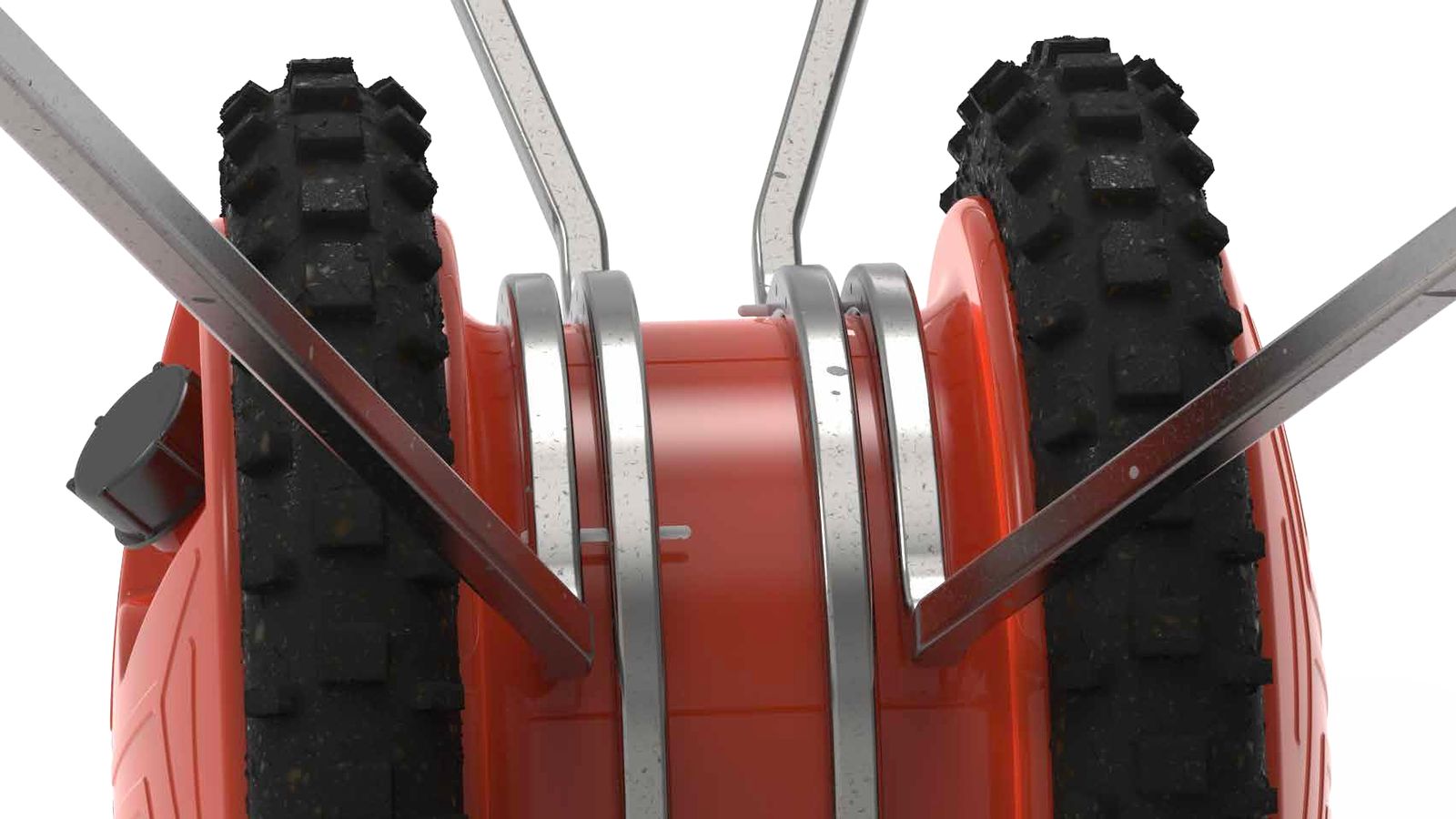
To keep the cost down, it uses a rotomoulded HDPE drum (a seamless plastic tank, the kind used for storing water), two recycled tyres and handles bent from steel tube. The fixings between these parts were worked out in 3D.

Exploded view of drum, tyres and handles
Parts: drum, tyres, two handles
Detail of drum and tyre
Detail of the handle fixing
Product

Two children pull the 50 kg of water instead of carrying it.

Each child pulls one handle, and the drum rolls between the two tyres over sand and stone. Reusing old tyres is the main idea of the design, because it keeps the cost low.

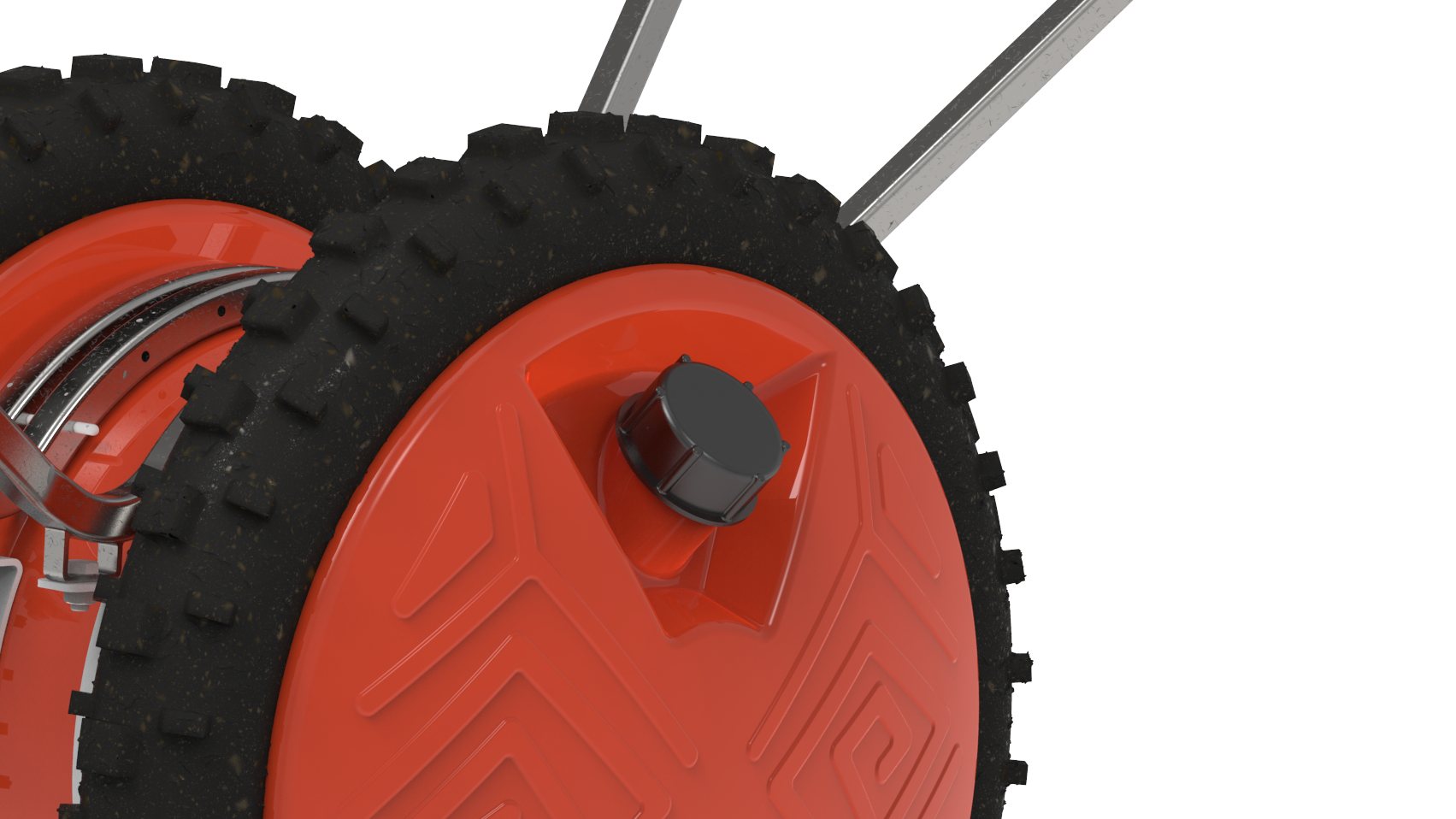
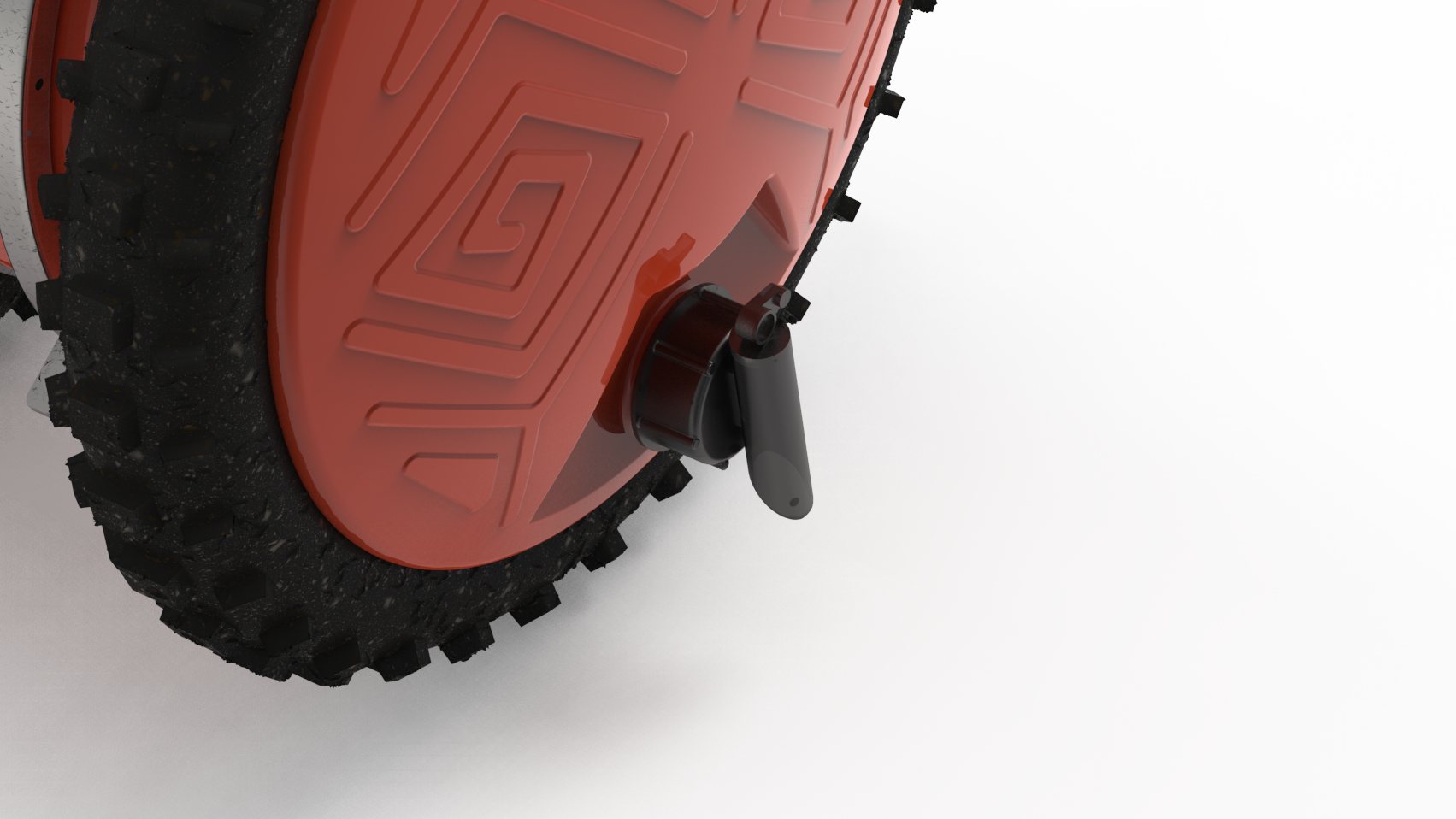
Drum cap and patterned side panel
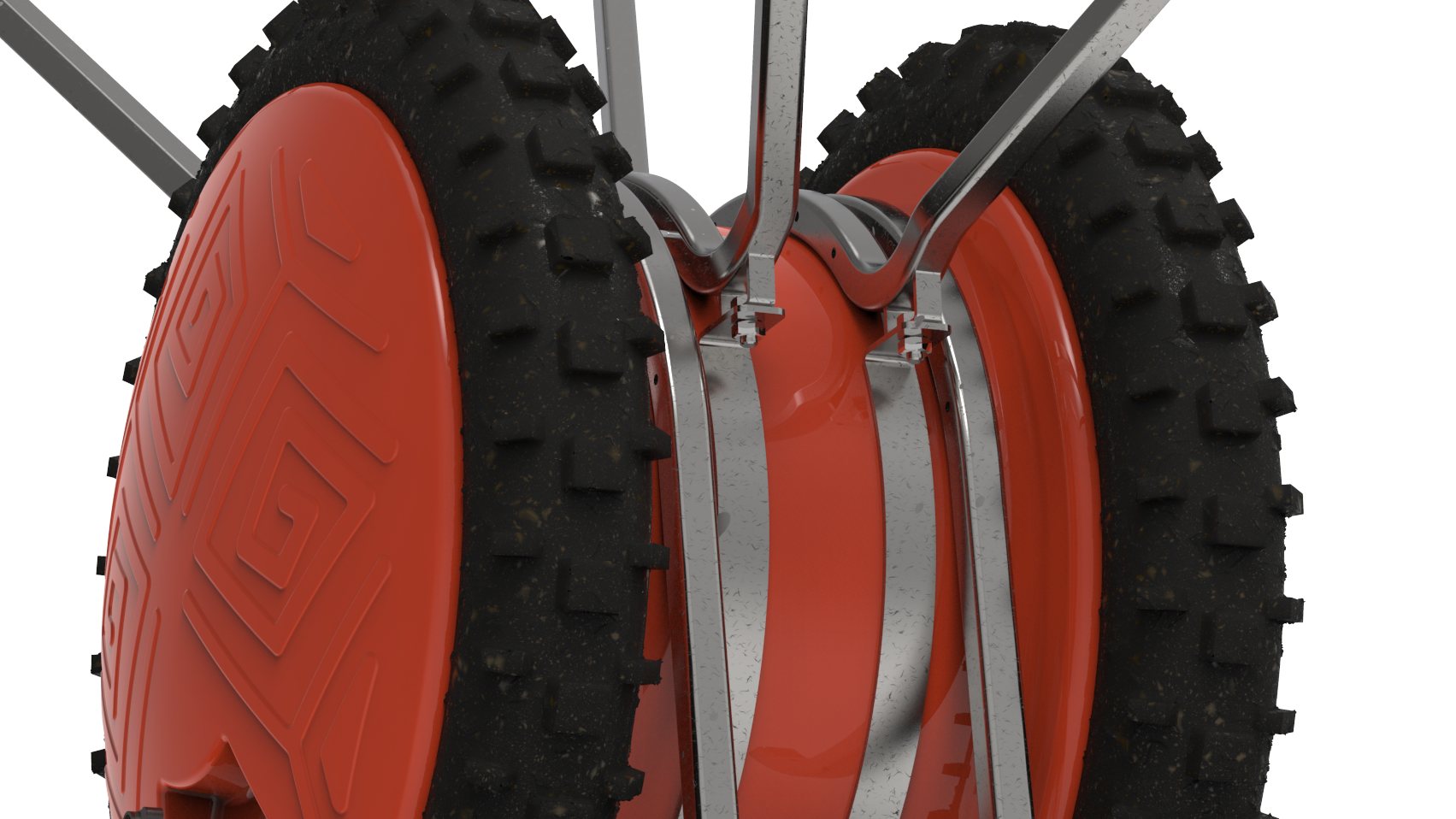
Handle straps wrapped around the drum between two tyres
Tyre and side panel with the fill cap
Handles meeting the drum between two tyres

Art

Field

The image starts from layered noise that is bent and set in motion.
WebGL lets a web page draw with the graphics card, and a shader is a small program that works out the colour of every pixel. Field is built from four steps.

  • fBmLayers of random noise at different scales are added together (fractal Brownian motion).
  • Domain warpThe noise is used to distort its own coordinates, so the pattern folds into itself.
  • FlowThe pattern drifts in one direction and changes over time.
  • OKLCHThe values become colours through a lookup in OKLCH, a colour space in which equal steps look equally different to the eye.
Image

Texture effects are layered on top of the image.

Halftone screens, grain and colour bands are added at different scales. Depending on which ones are strong, the same motion can look like liquid, like print, or like a screen seen up close.

Interface

I also wrote the control interface.

Every parameter can be changed while the image runs. The program moves gradually from the old value to the new one, so the structure, colour and surface change smoothly instead of switching at once.

Changing parameters while the image runs
Object

The machine moves but produces nothing.

It does not cut, carry or make anything, and each turn of the top leaves everything exactly as it was.

Use

The machine can only be watched.

The frame is so fragile that touching it would upset its balance. The viewer cannot use it and has to keep a distance.

Position

The project looks at design without a function.

Design projects usually go from a problem to a result that solves it. This one drops the result and looks only at how a mechanism is put together and kept in balance. It follows Bruno Munari’s Macchine inutili (“useless machines”), hanging objects he began making in the 1930s to be looked at rather than used. The essay argues that an object without a task can make people slow down and look at it closely.

Art

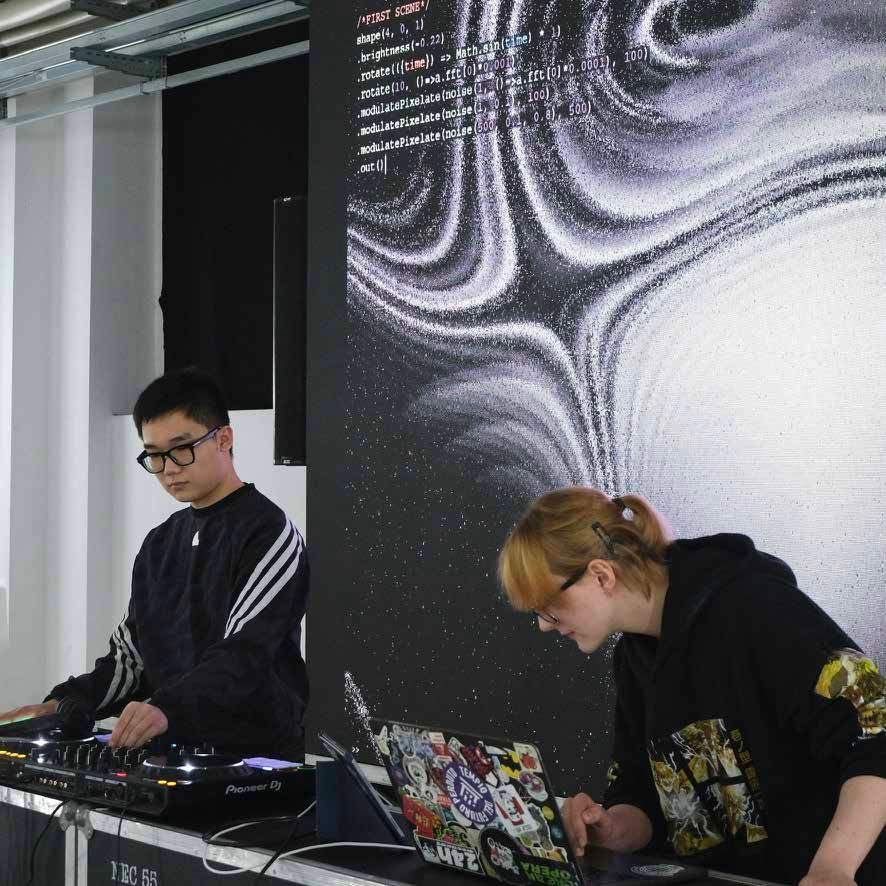
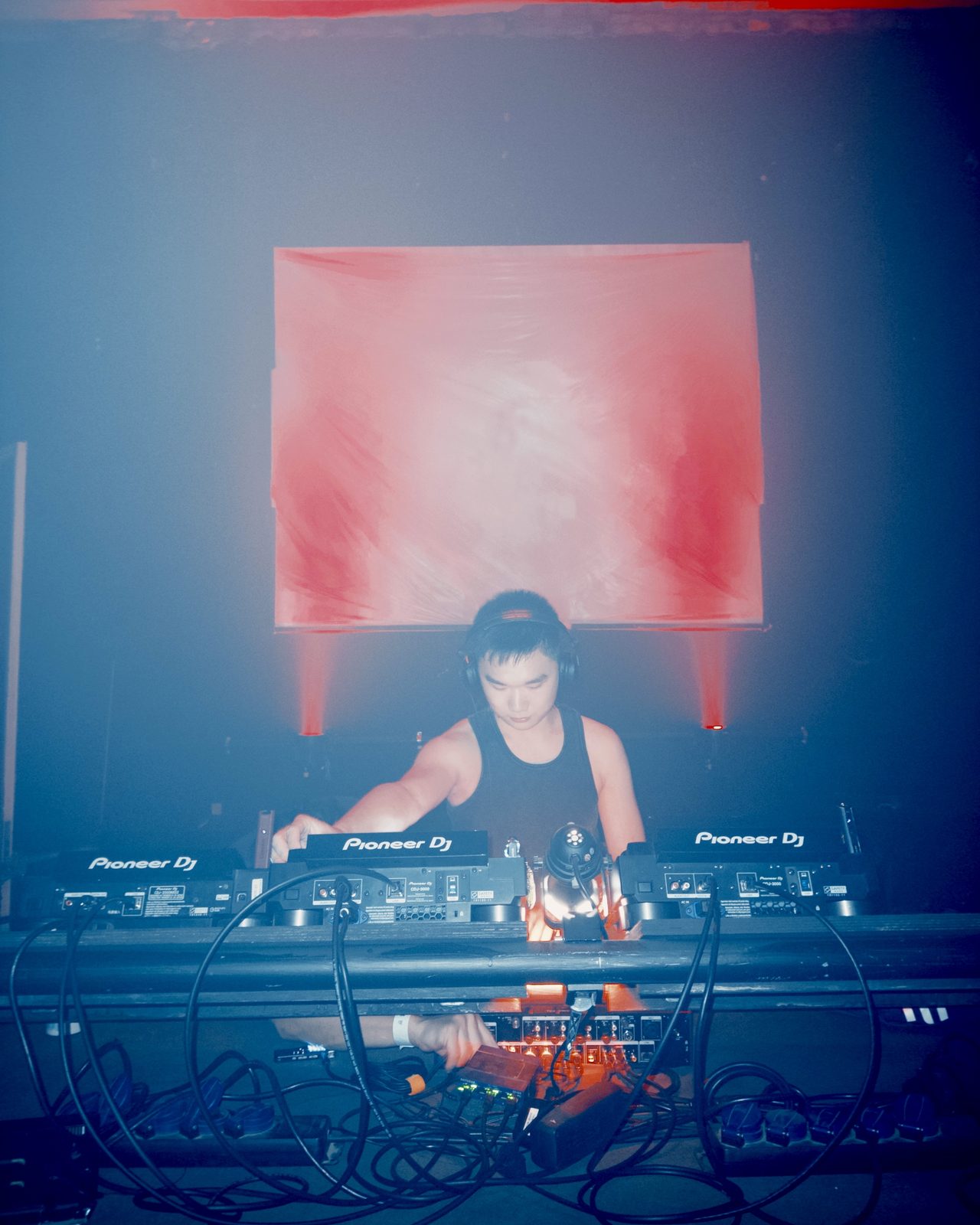
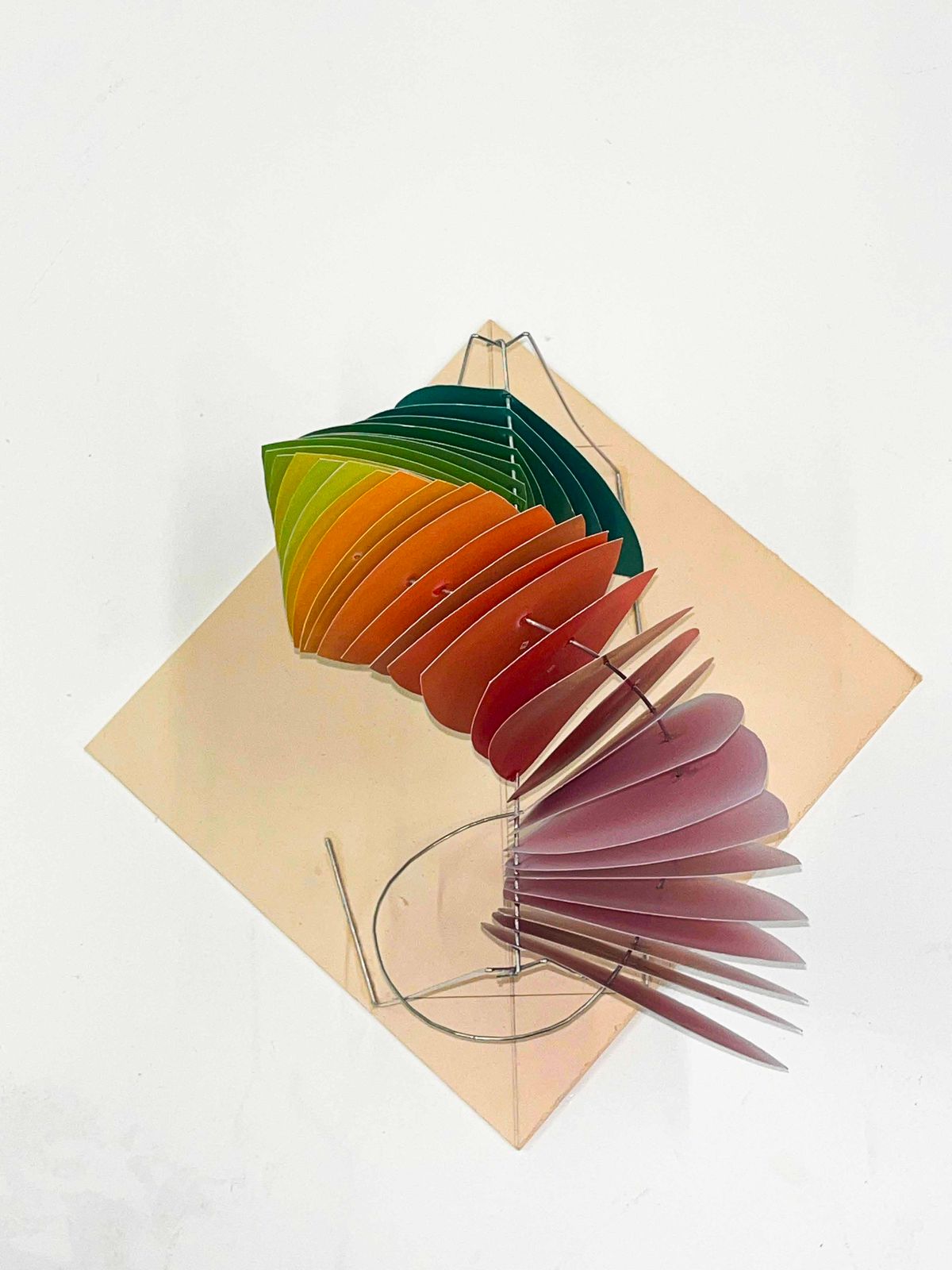
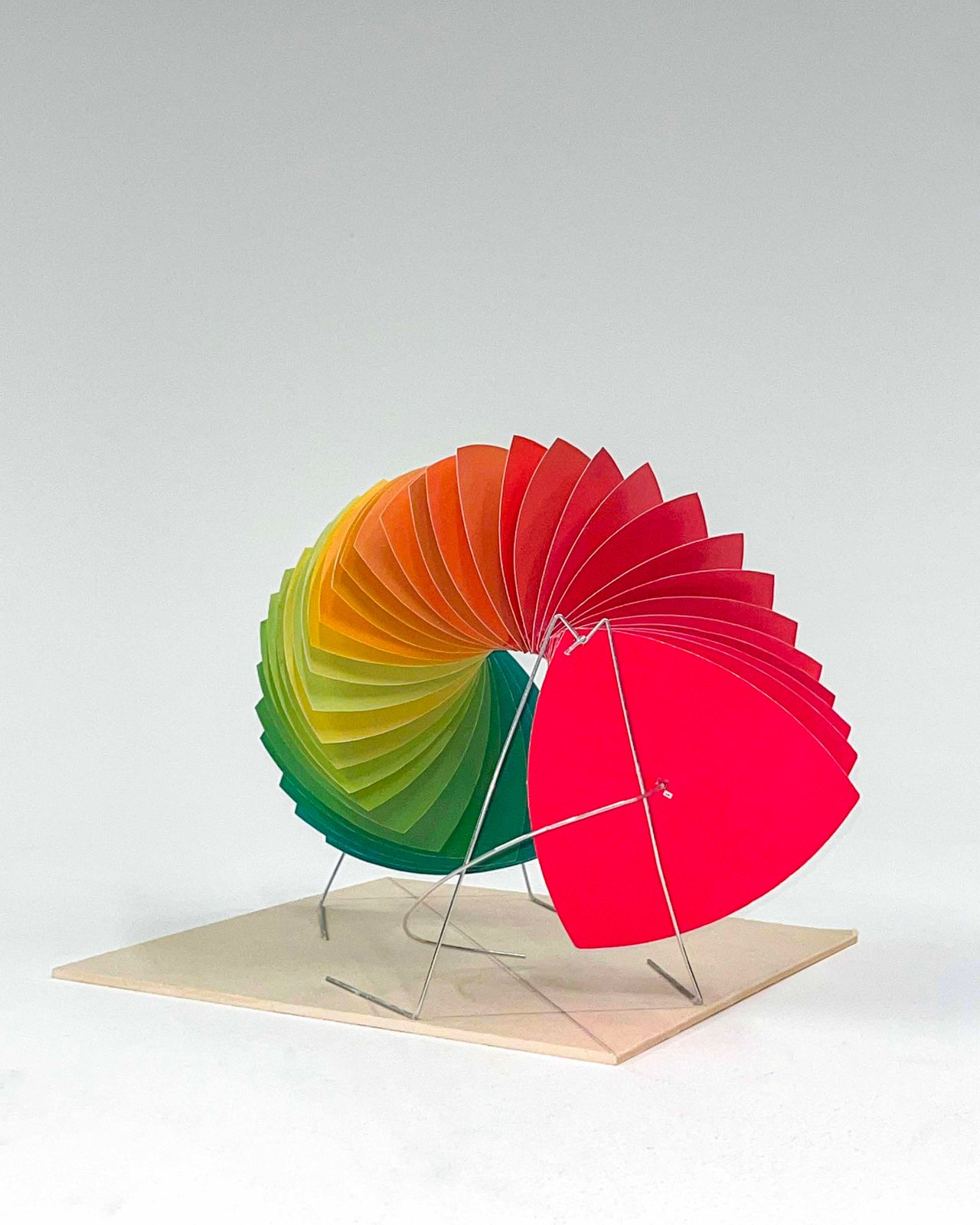
Work made outside course briefs: spiral forms built with a wooden, motor-driven mechanism, and DJ sets, among them the sound design for a night event at Fabbrica del Vapore in Milan in 2025.

Two performers at a mixing desk before a projected visual
Fabbrica del VaporeSound design
Flashing lights
Live setDJing
DJ in headphones at three Pioneer decks, a red-lit screen behind
Live setDJing
Spiral object of fanned coloured sheets
Spiral forms · Model 1Kinetic object
Spiral of sheets on a table
Spiral forms · Model 2Kinetic object

Archive

04

Coursework, exercises and side projects from 2024 to 2026. They include a brand exercise for Tempio Record, visuals for Oriental Techno Club, graphic and layout design, hand sketching practice, reversible tiles, a rain shelter and graphics for Artopia Gallery.

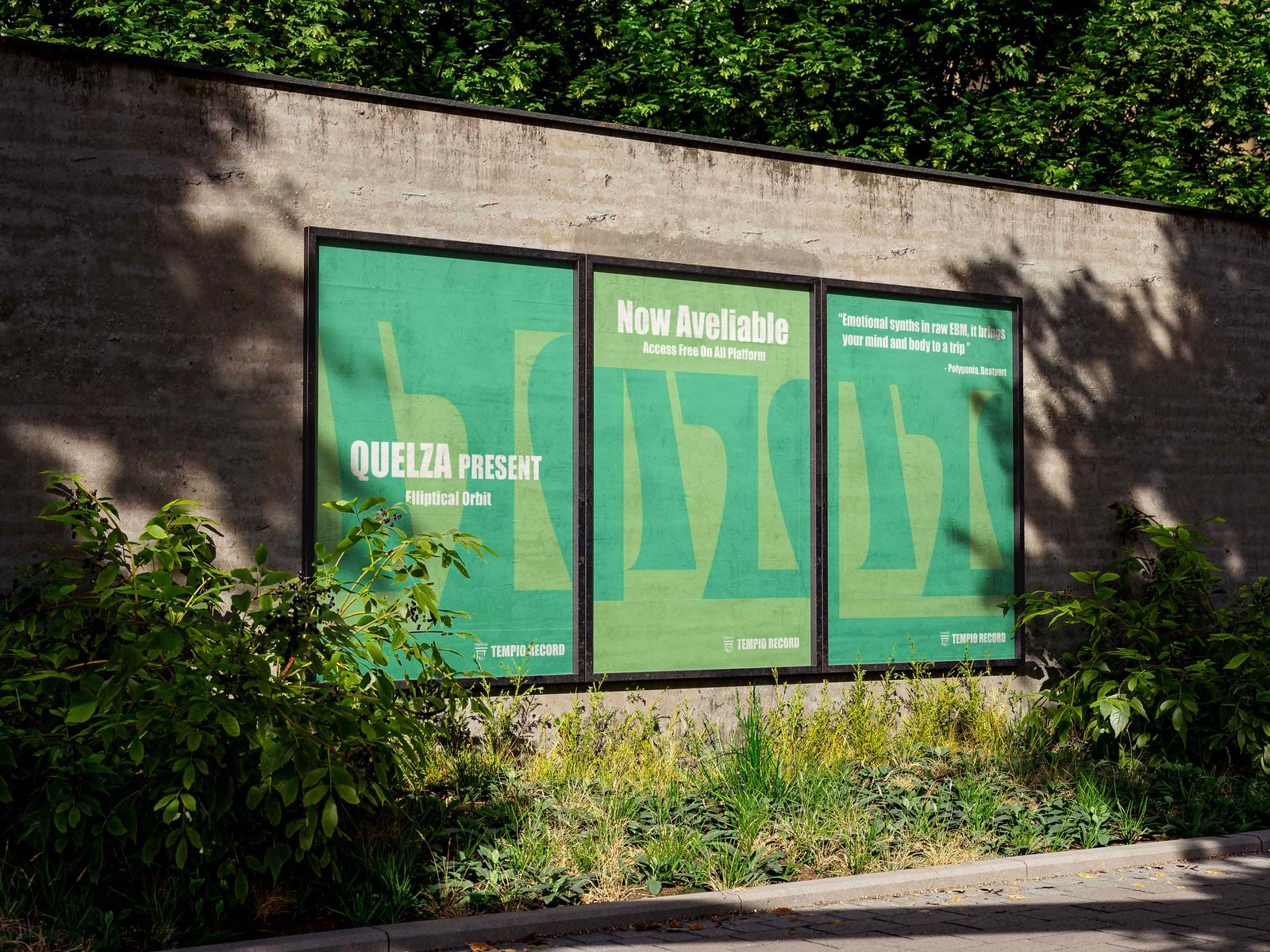
Green posters on a billboard in a park
Tempio Record · PostersGraphic design
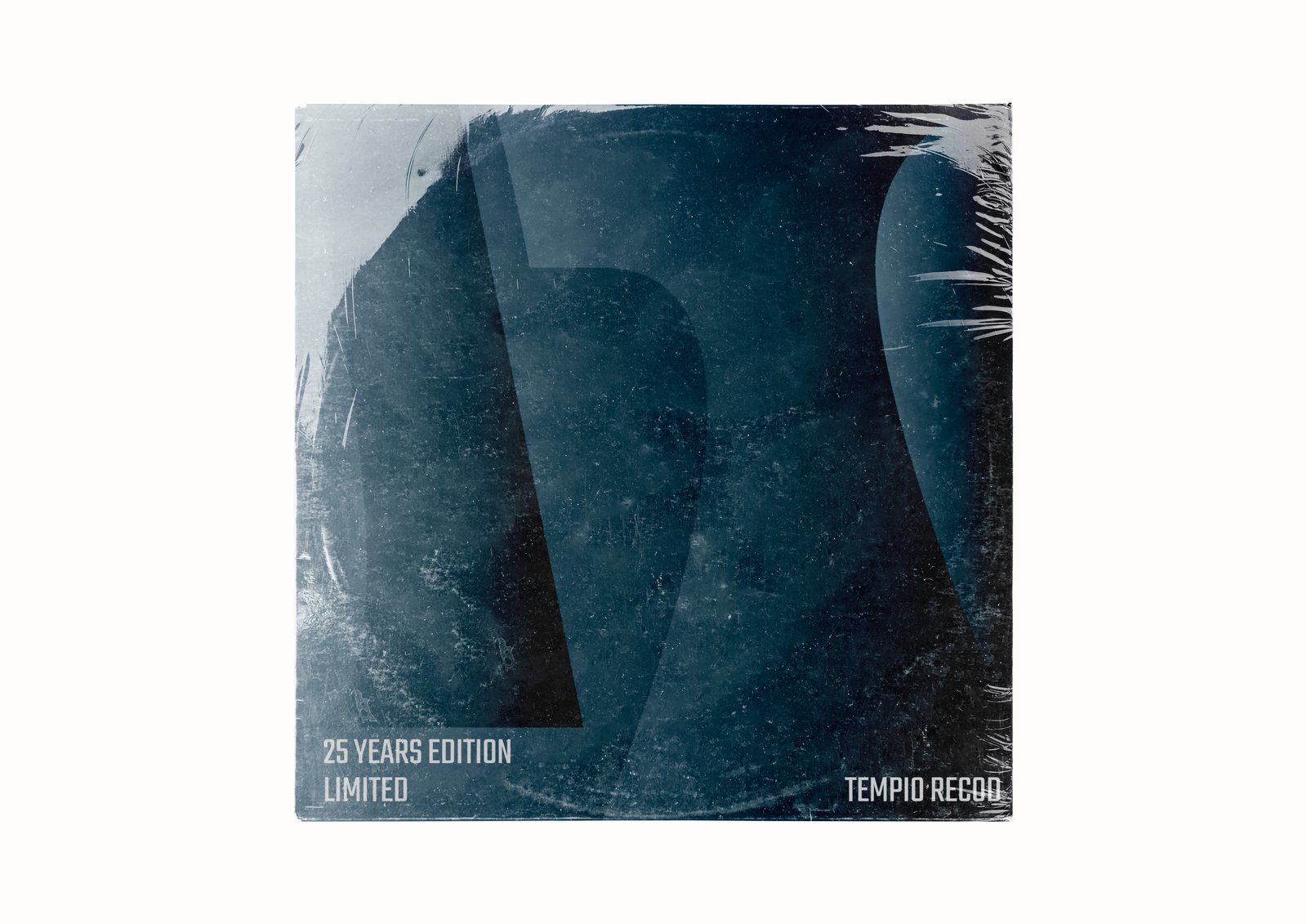
Sealed record sleeve, 25 years limited edition, Tempio Record
Tempio Record · SleeveGraphic design
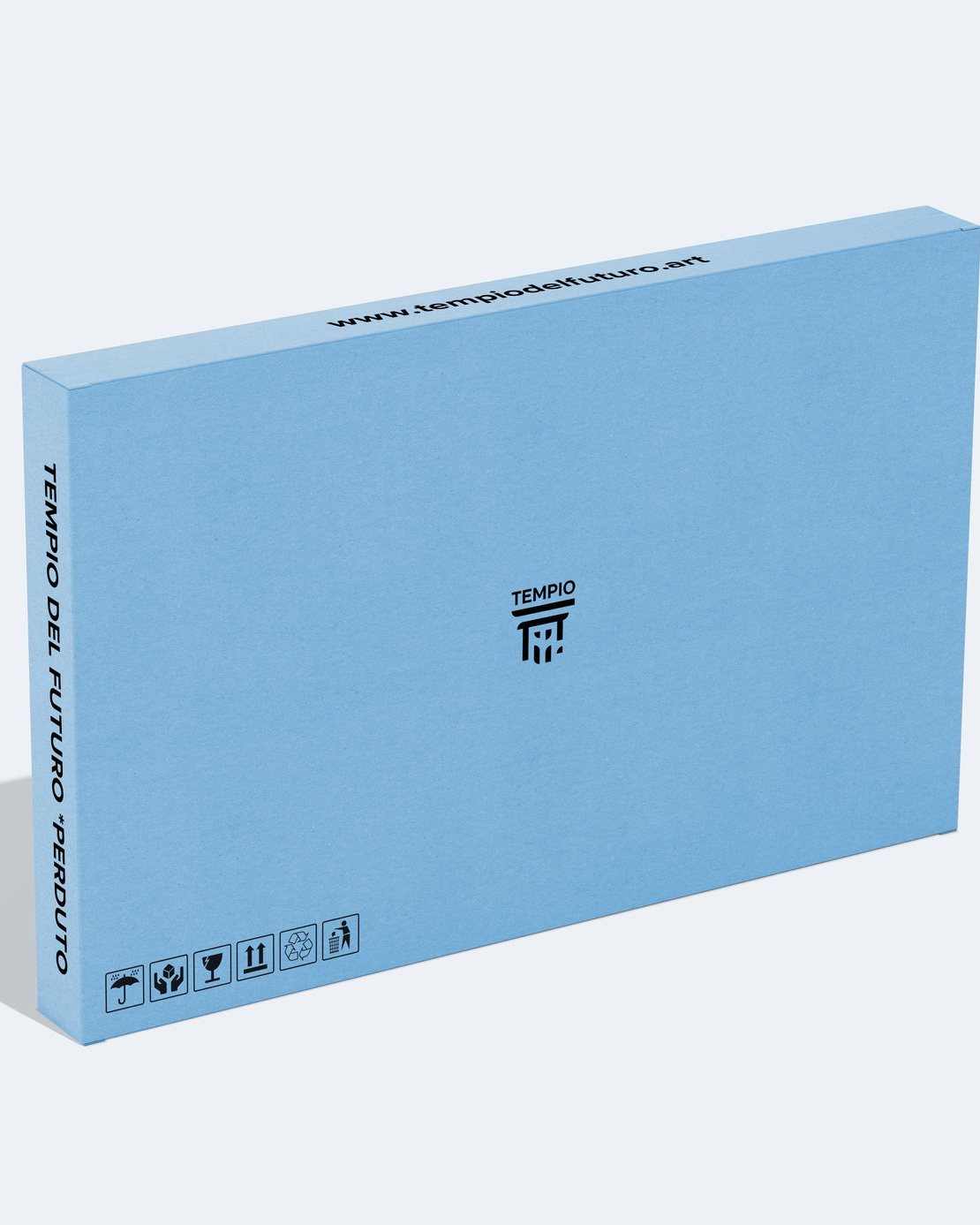
Light blue shipping box printed with the Tempio logo
Tempio Record · PackagingGraphic design
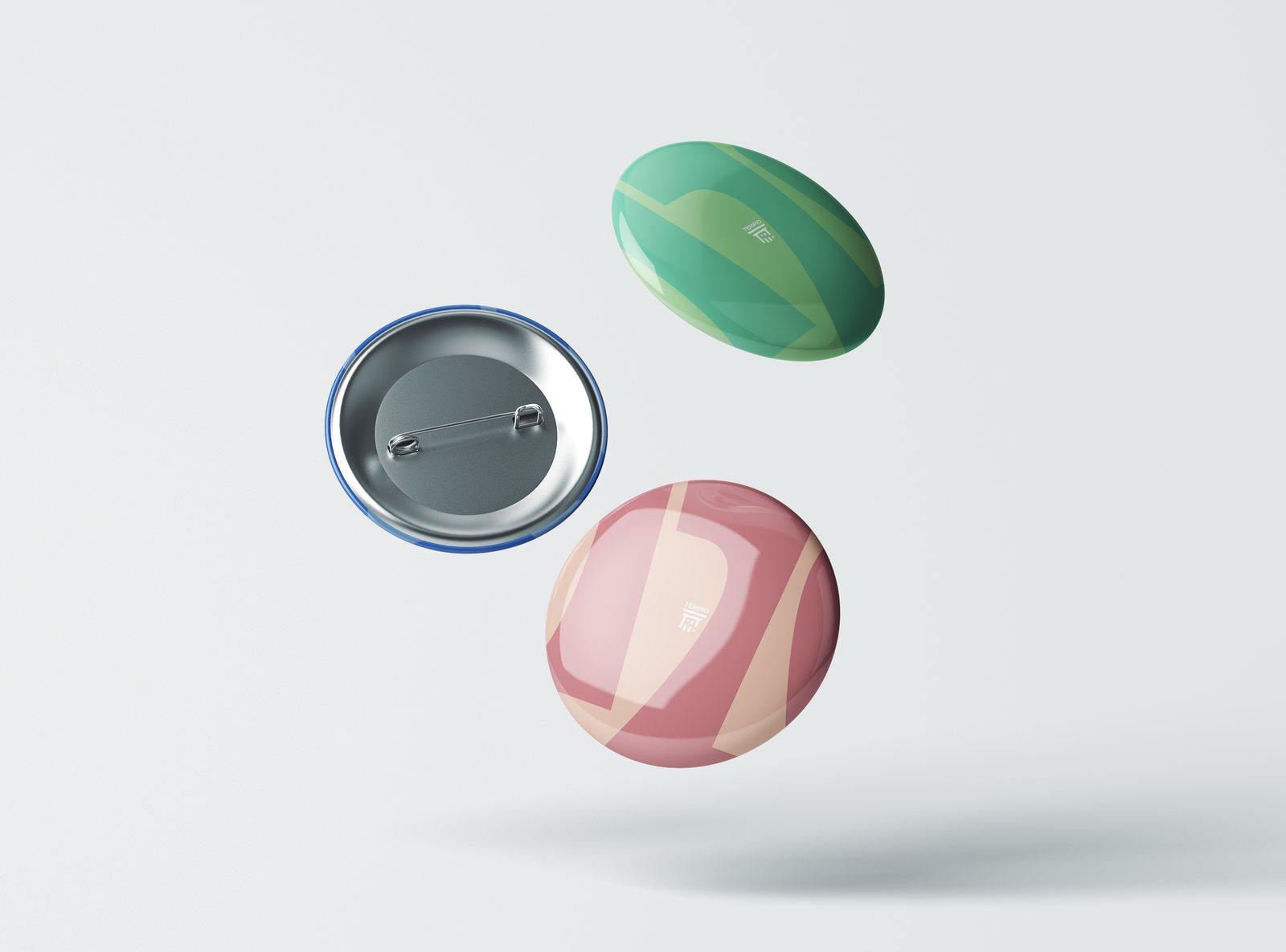
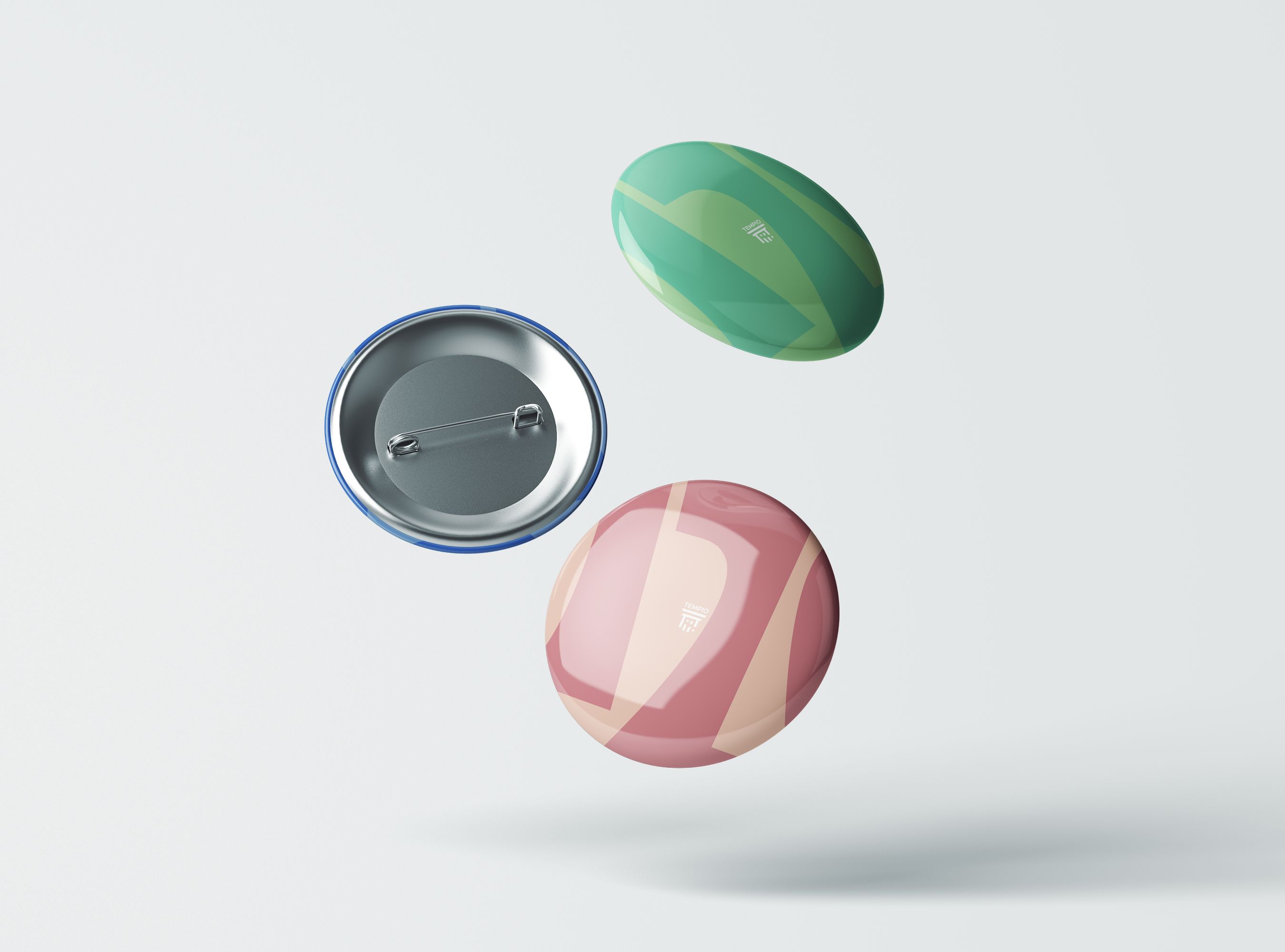
Three pin badges in green and pink
Tempio Record · BadgesGraphic design
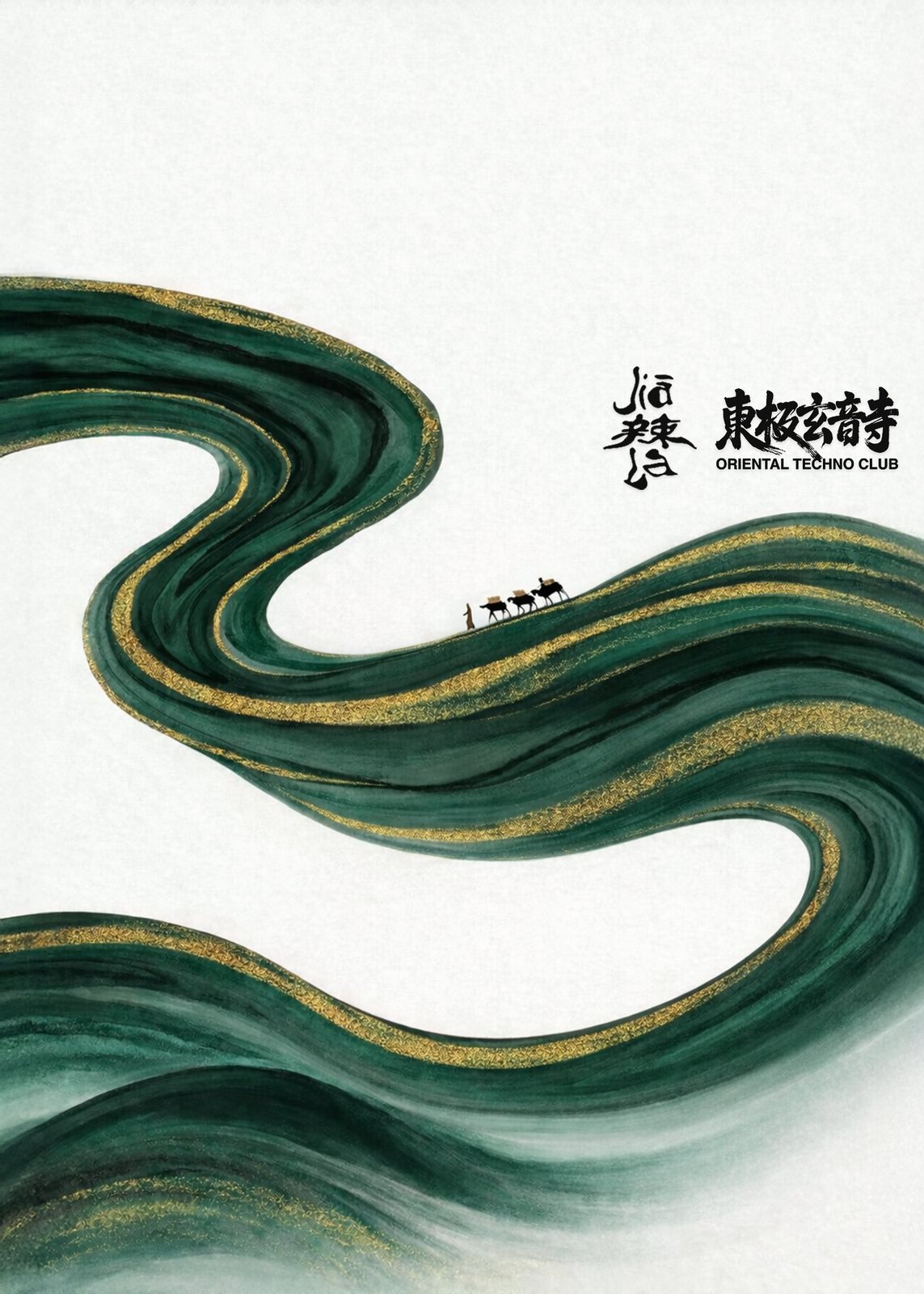
Poster with a green ink brushstroke and the Oriental Techno Club logo
Oriental Techno Club · EventPoster design
Podcast cover #3, Uzuki, on an ochre floral pattern
Oriental Techno Club · #3Podcast cover
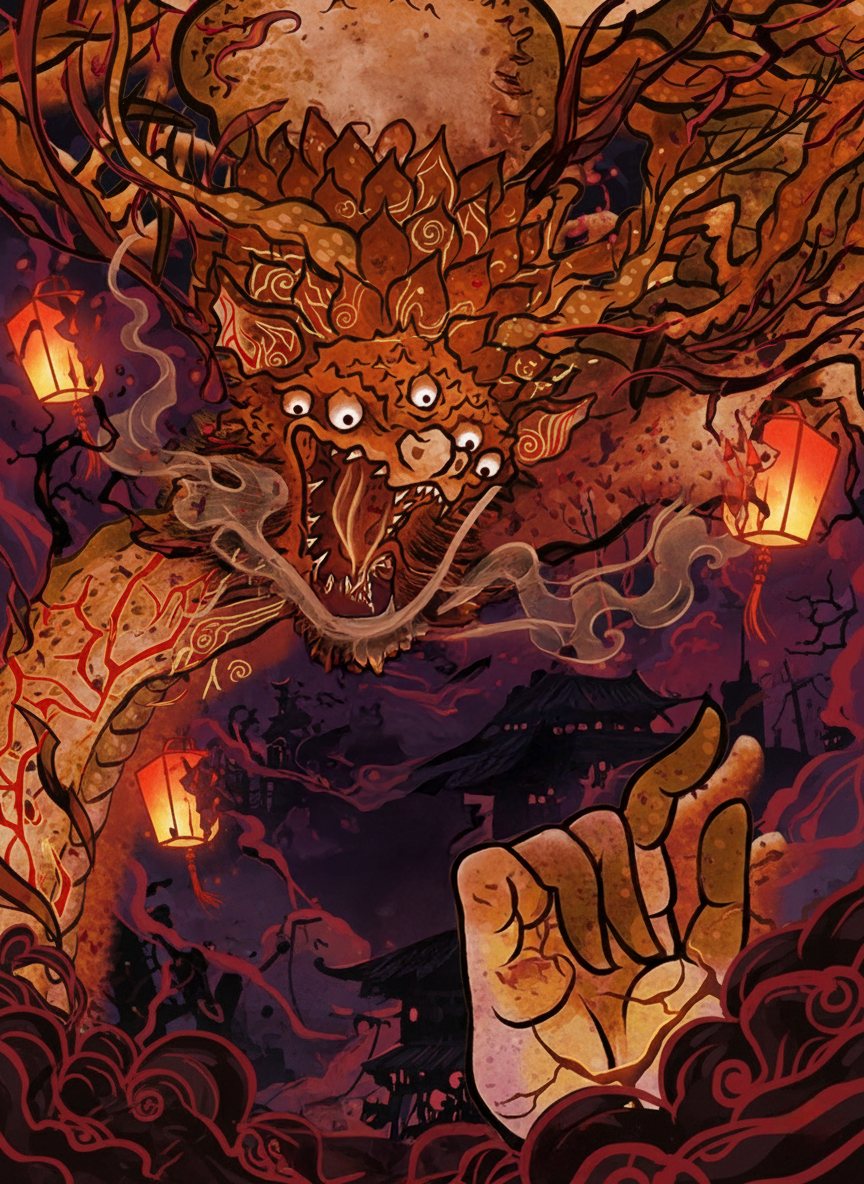
Illustration of a dragon with lanterns and smoke
Dragon · AI-generatedIllustration
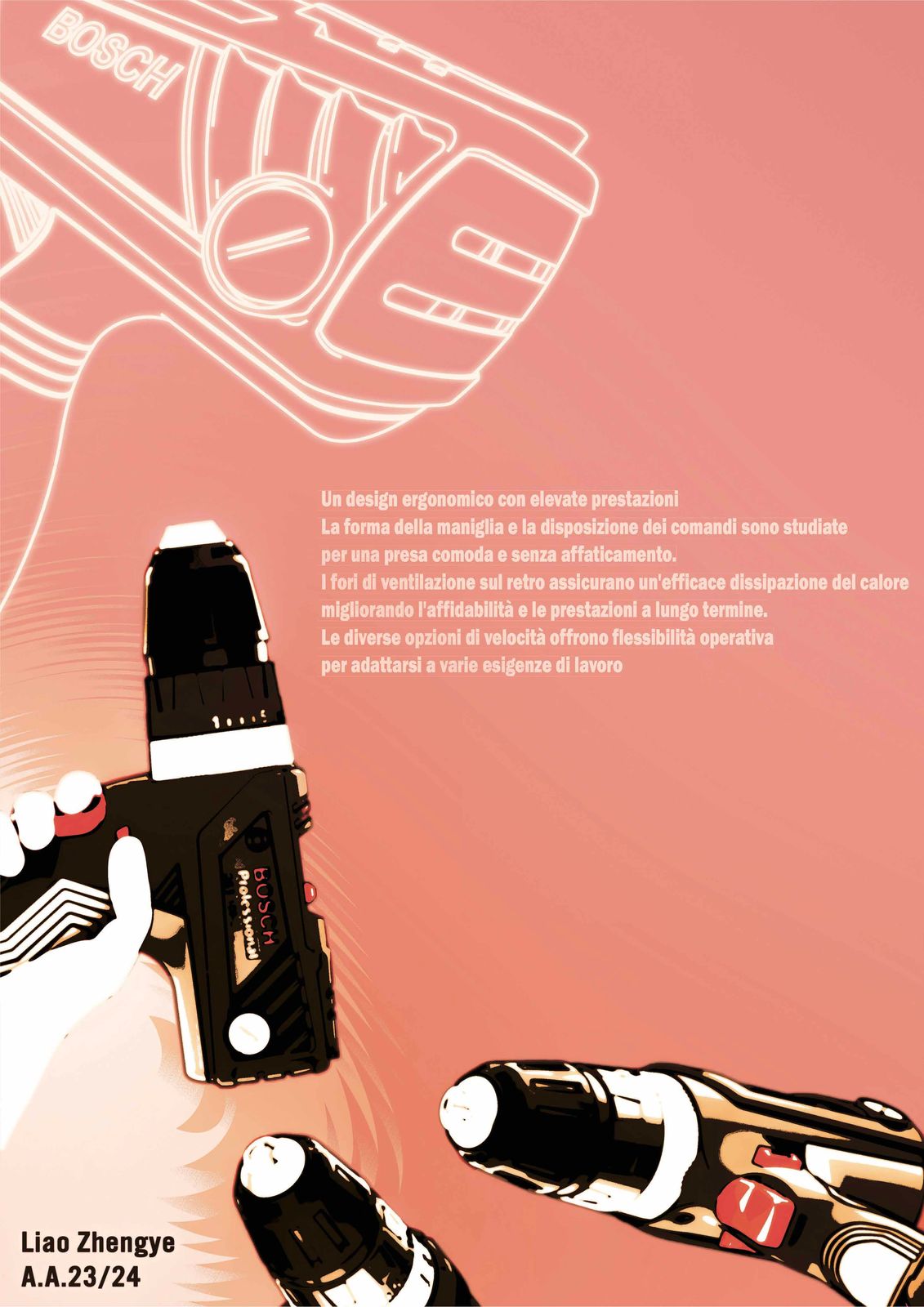
Pink layout with drill illustration
DrillLayout design
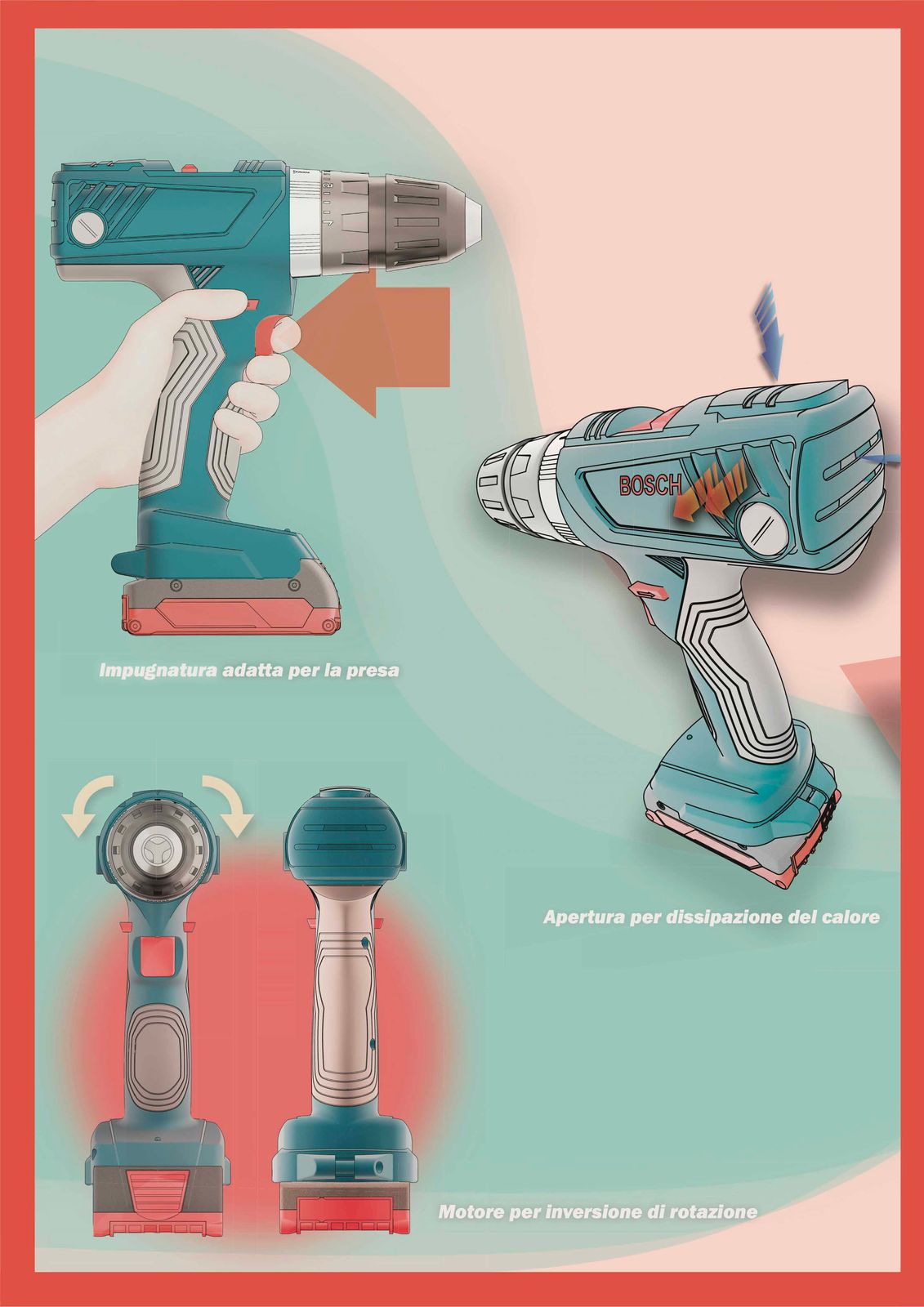
Teal and red layout of drill parts
Drill partsLayout design
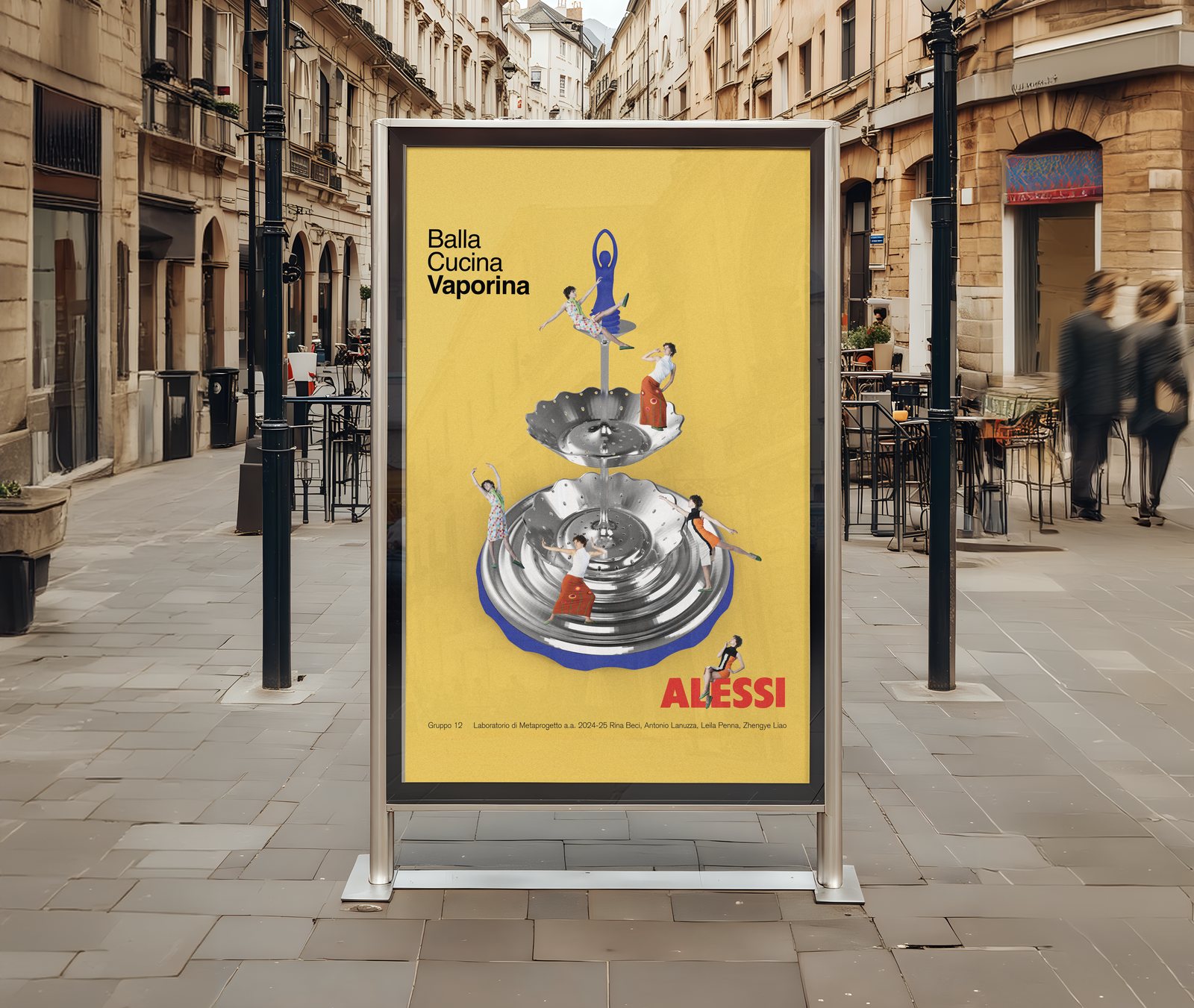
Vaporina poster for Alessi on a street billboard
Vaporina · AlessiPoster design
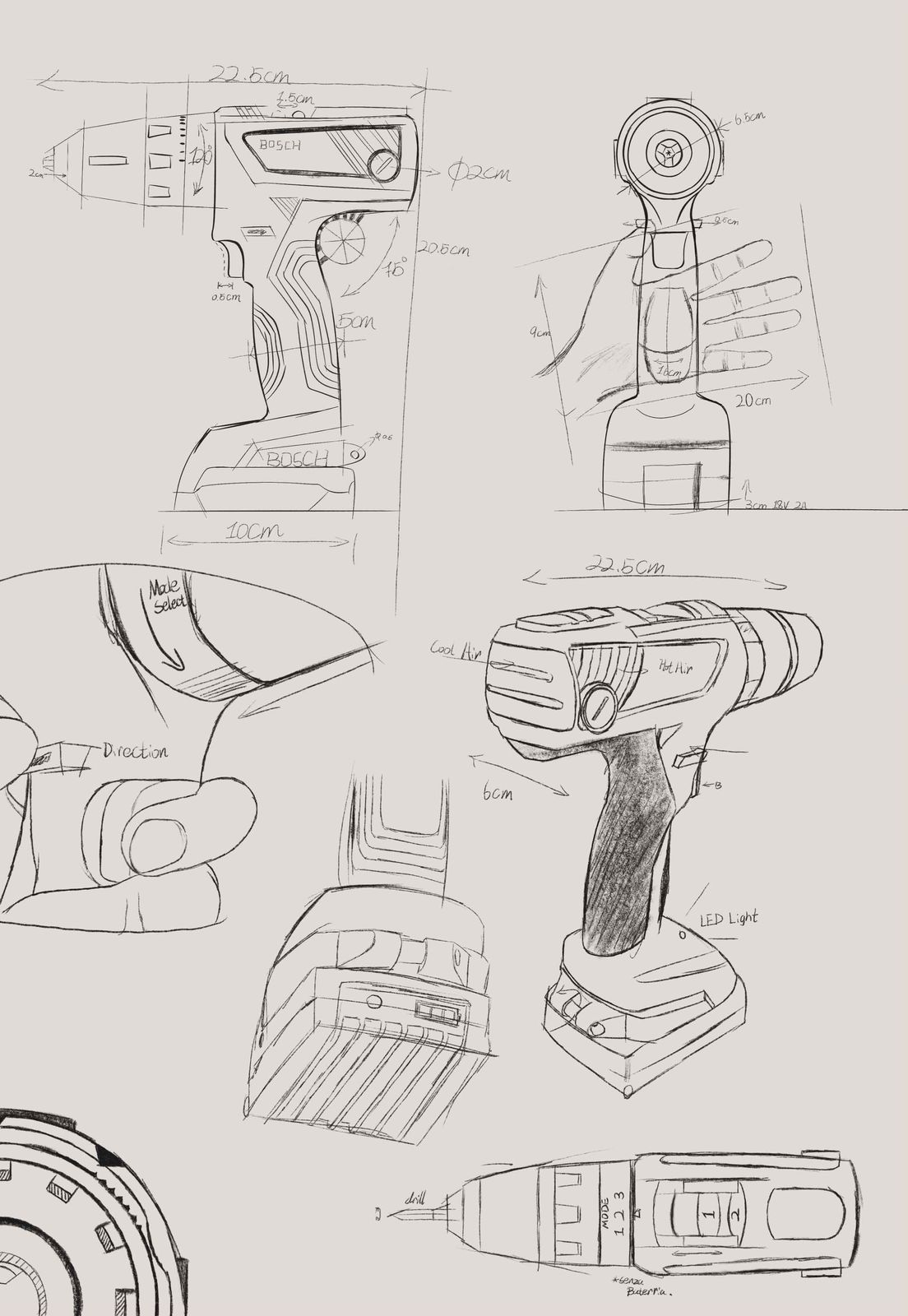
Pencil sketches of a cordless drill
DrillHand sketching
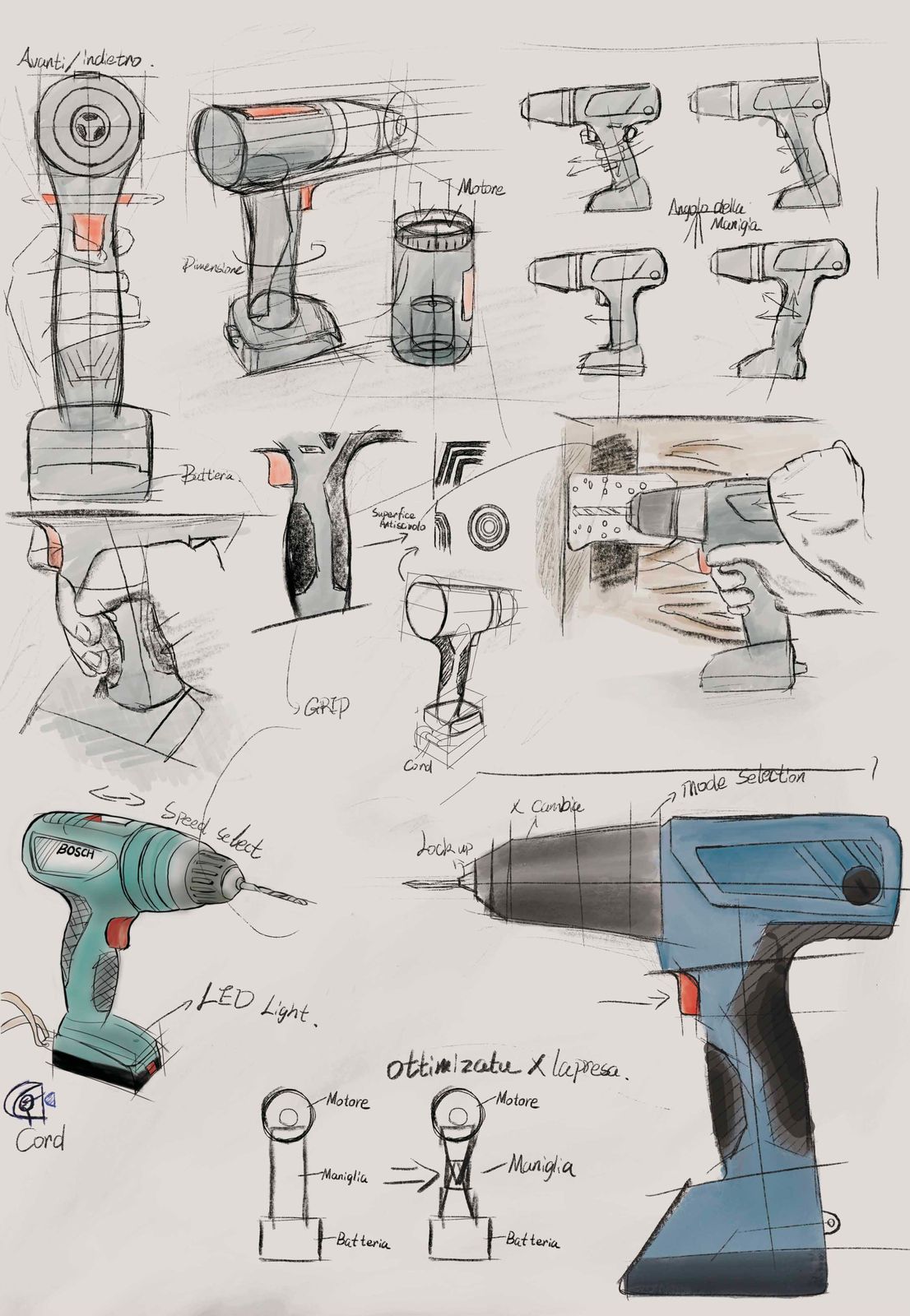
Coloured sketches of drills
Drills in colourHand sketching
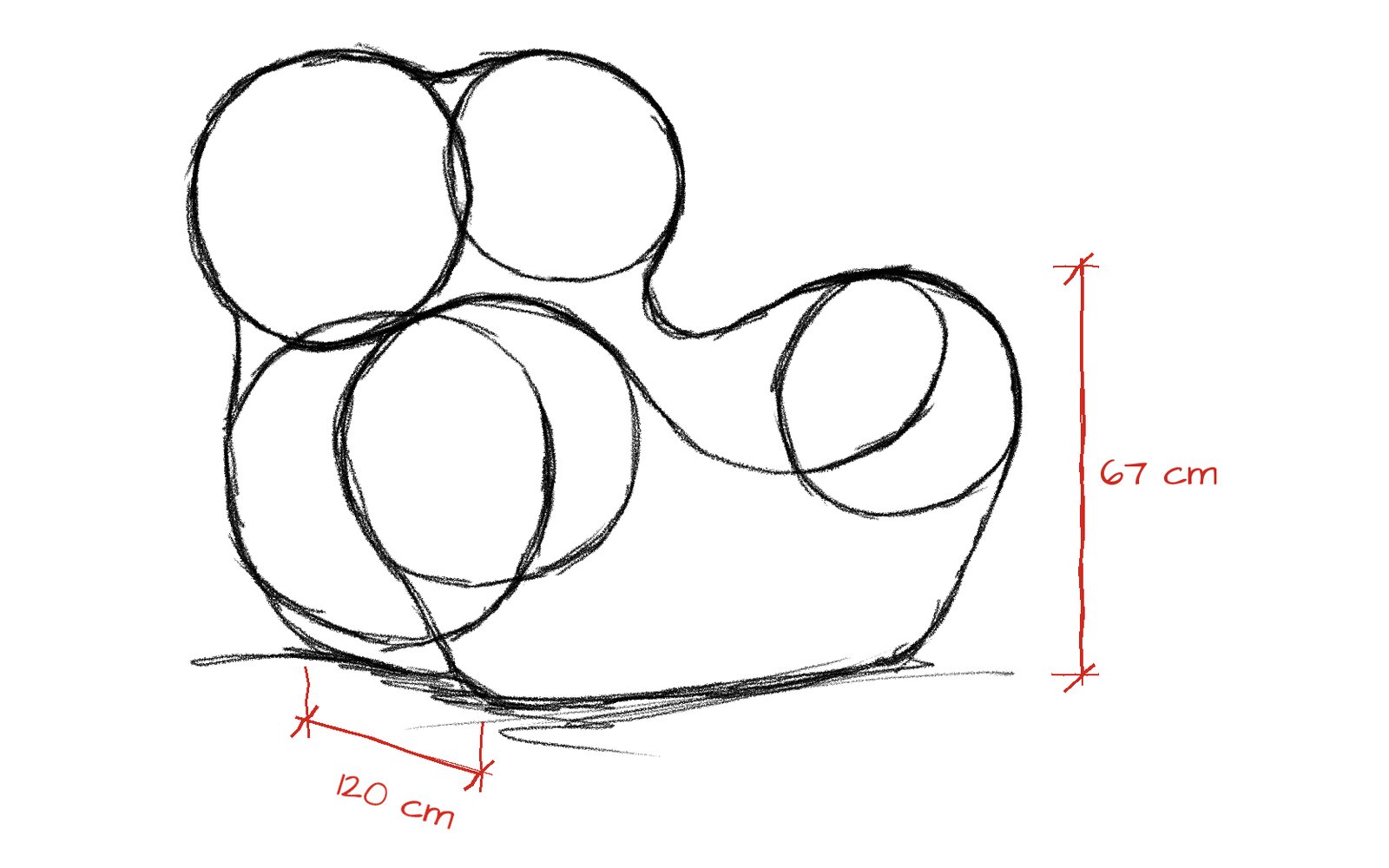
Front and side sketch with dimensions of 120 cm and 67 cm
Front and side view with dimensionsHand sketching
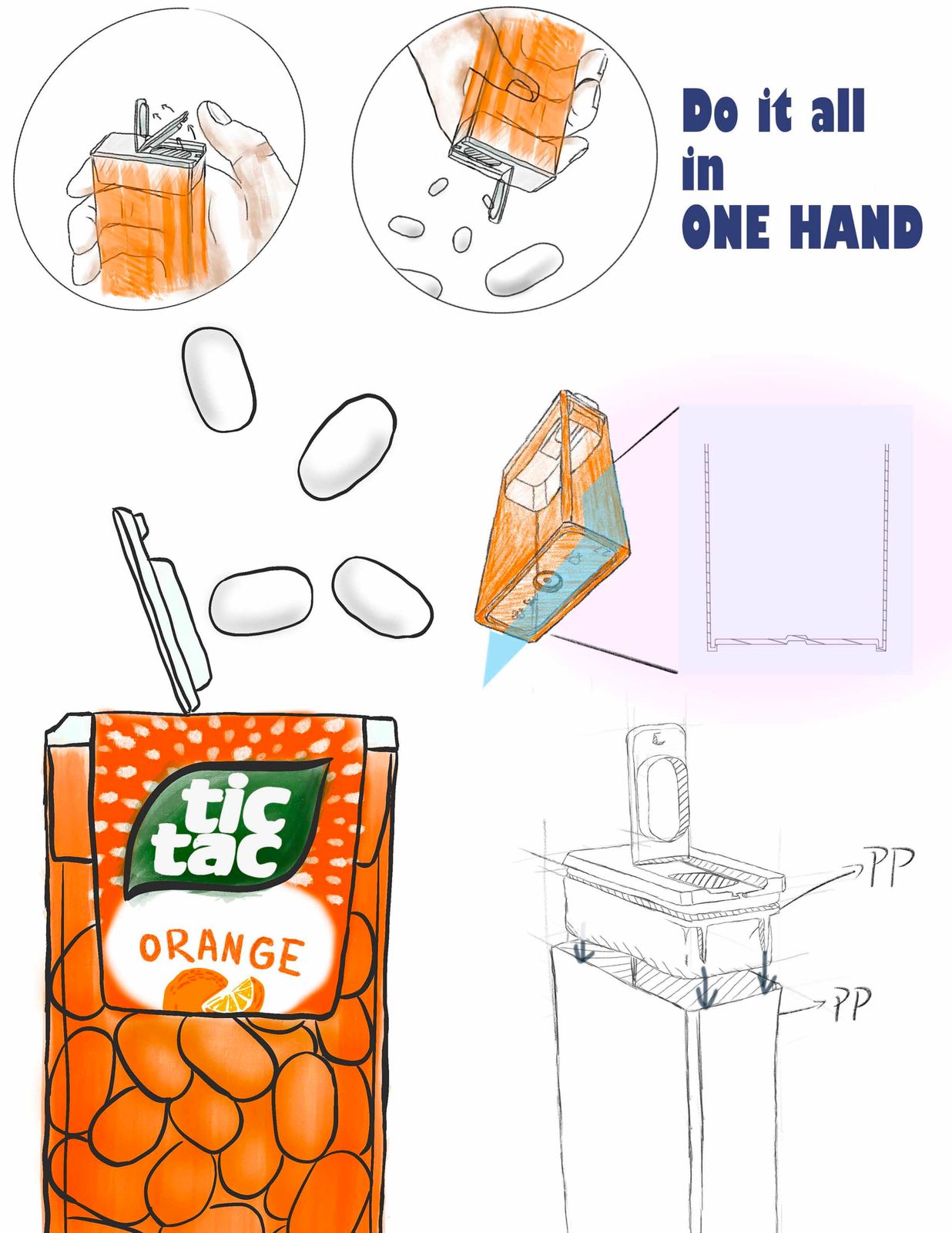
Product sketches
Product studiesHand sketching
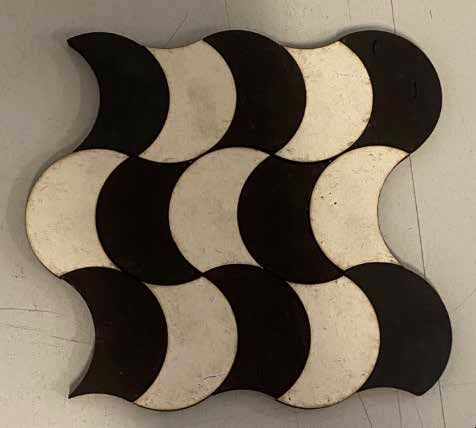
Black and white interlocking curved tiles
Tessellation · BlackTile design
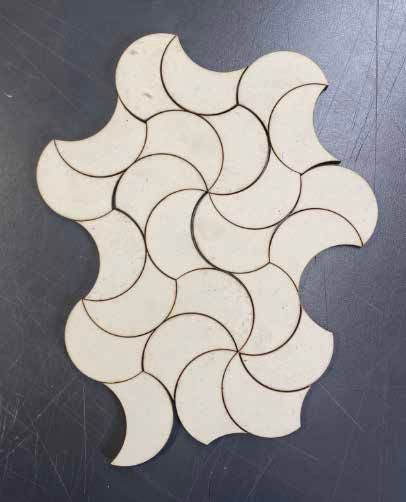
White curved tiles on blue
Tessellation · WhiteTile design
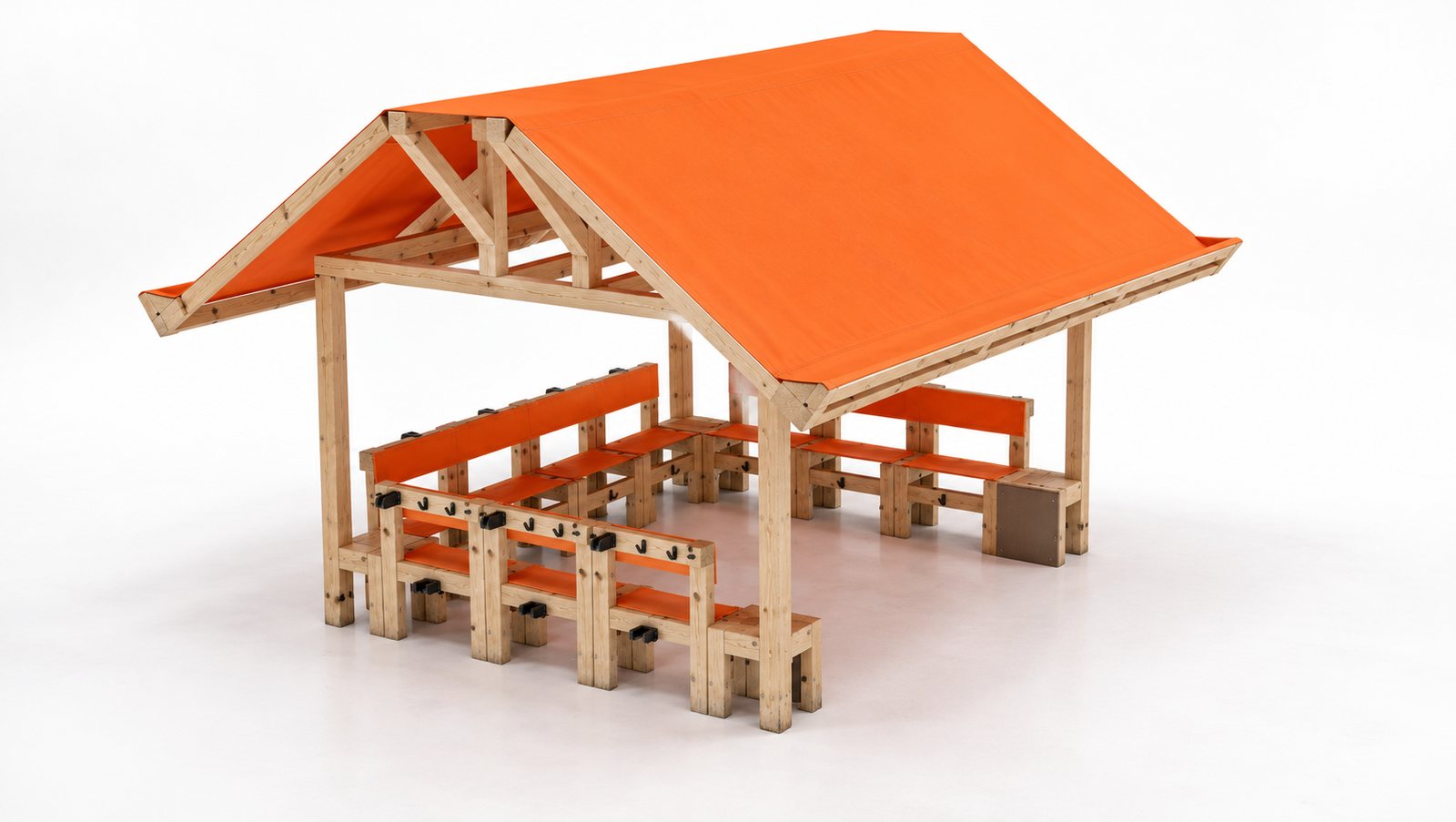
Timber shelter with an orange roof and benches, rendered in a white studio
Rain shelter · New ZealandSpatial design
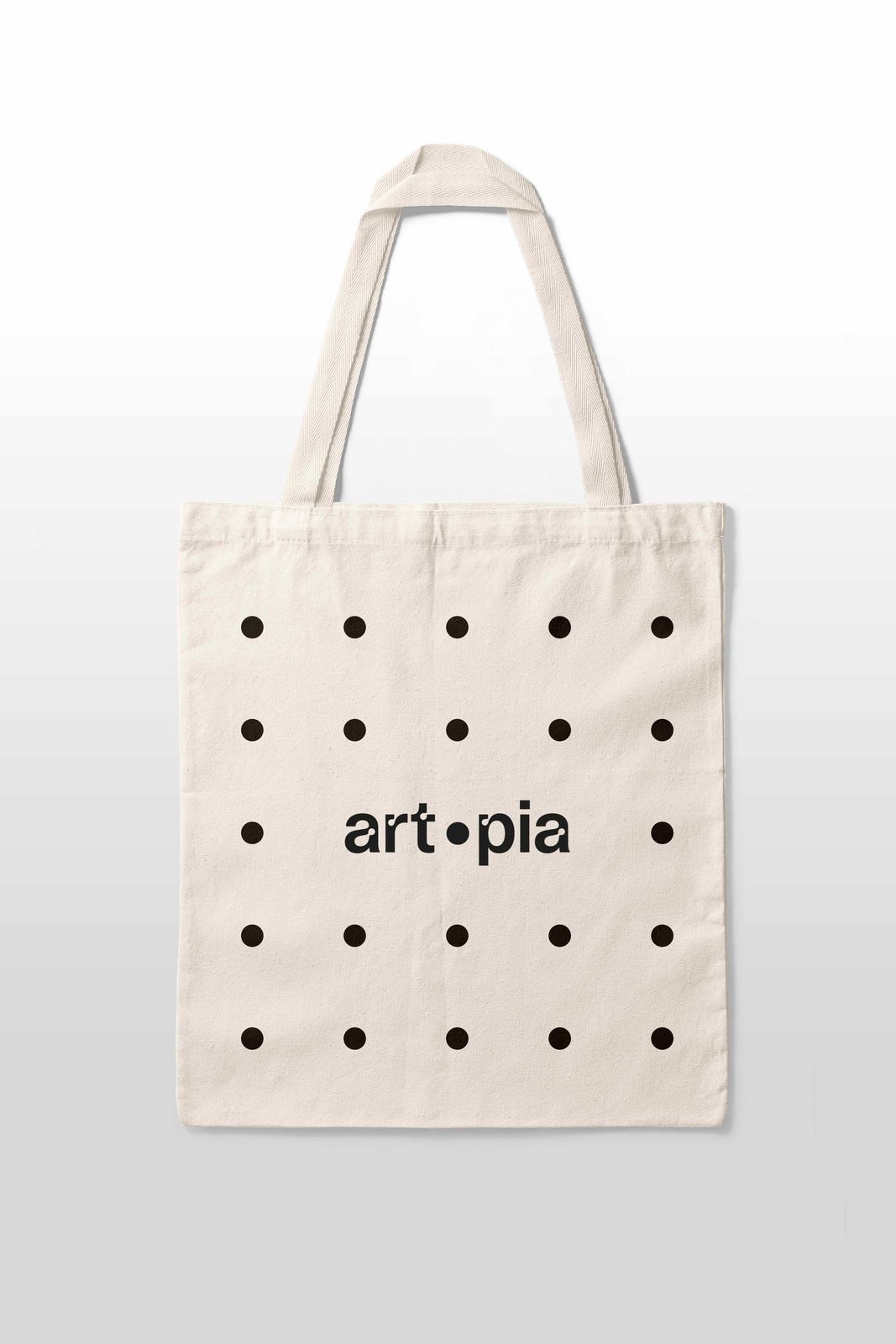
Tote bag with dot pattern and art·pia logo
Artopia Gallery · Tote bagGraphic design
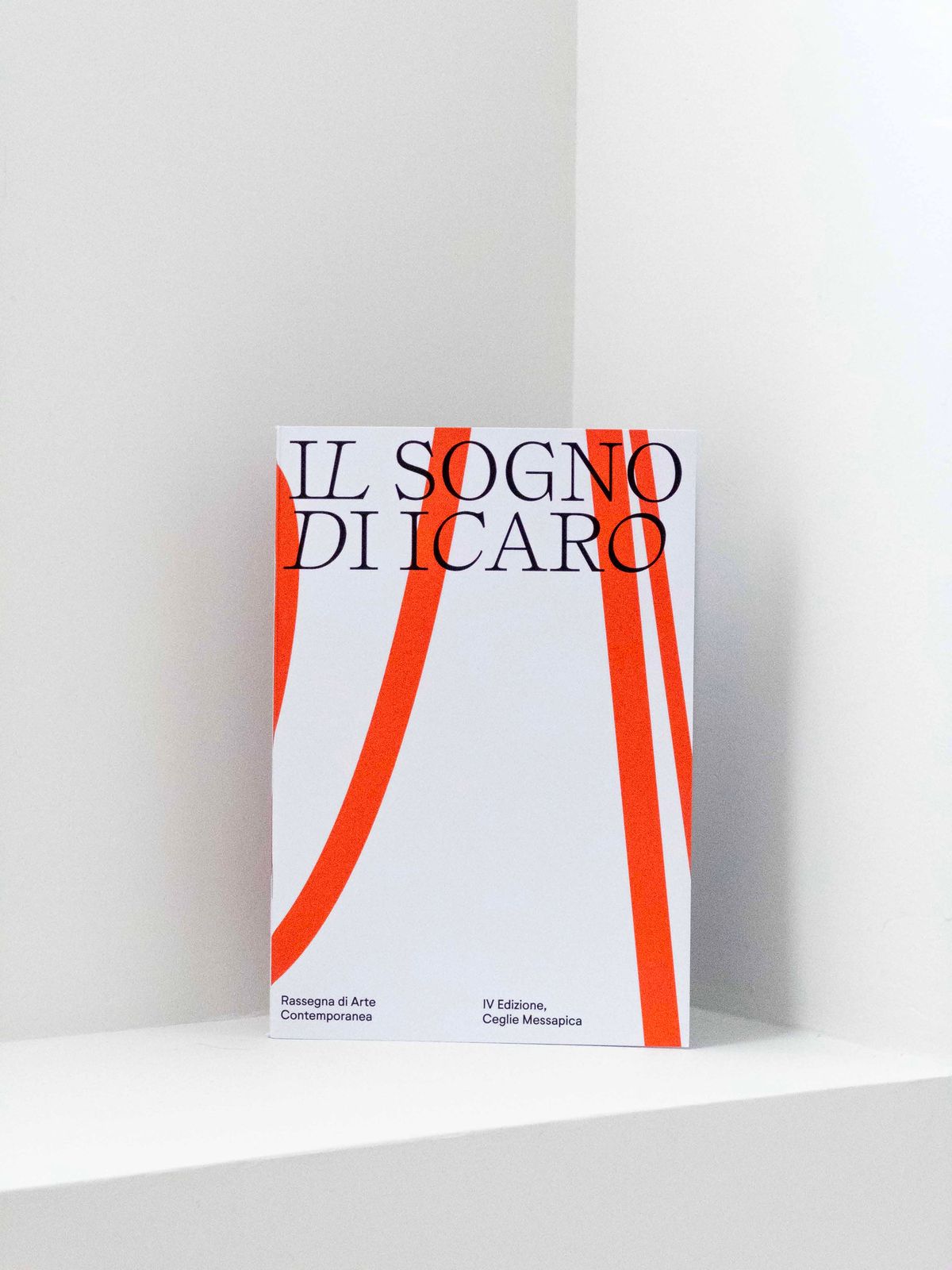
Catalogue cover Il sogno di Icaro
Artopia Gallery · CatalogueEditorial design
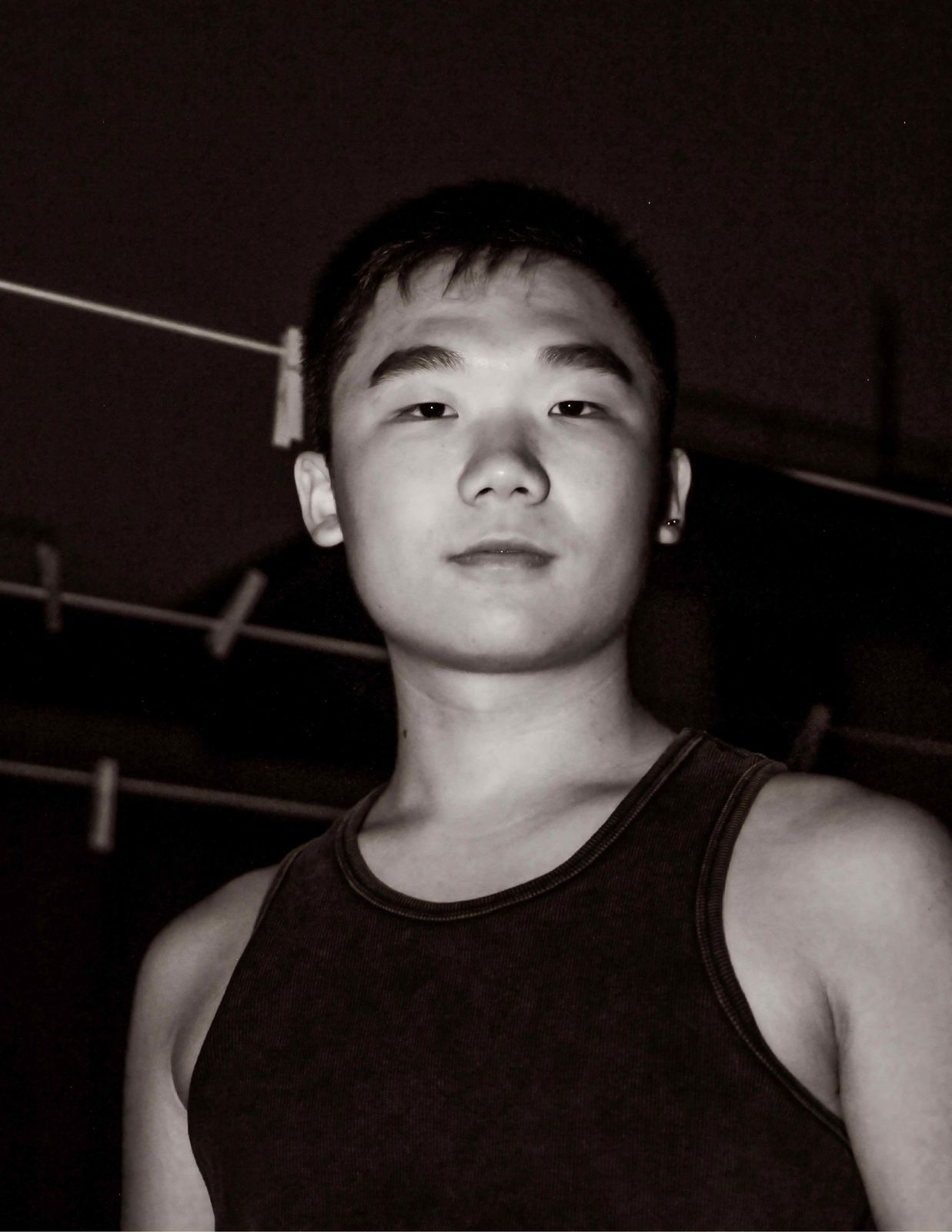
Portrait of Zhengye Liao
About

I grew up in Guangdong, China, and study product design (BSc) at Politecnico di Milano. In 2026 I spent an exchange semester in industrial design at ABK Stuttgart. I interned at Artopia Gallery in 2025. Since 2023 I have been a promoter and resident artist at Tempio Del Futuro Perduto*, a cultural space in Milan.

Experience
  1. 2023–NowPolitecnico di MilanoBSc Product Design
  2. 2025Artopia GalleryIntern
  3. 2026Staatliche Akademie der Bildenden Künste StuttgartExchange, Industrial Design
  4. 2023–NowTempio Del Futuro Perduto*Promoter, Resident Artist
Contact

Zhengye.Liao@mail.polimi.it